Terrorism with a “Human Face”: The History of America’s Death Squads

Posted by FS On Thursday, 10 January 2013 0 comments

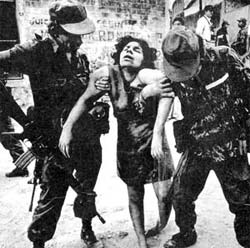
 salvadordeathsquad
Image: El Salvador Death squads
The recruitment of death squads is part of a well established US military-intelligence agenda. There is a long and gruesome US history of covert funding and support of  terror brigades andtargeted assassinations going back to the Vietnam war. 
As government forces continue to confront the self-proclaimed “Free Syrian Army” (FSA),  the historical roots of  the West’s covert war on Syria –which has resulted in countless atrocities– must be fully revealed.
From the outset in March 2011, the US and its allies have supported the formation of death squads and the incursion of  terrorist brigades in a carefully planned undertaking.
The recruitment and training of terror brigades in both Iraq and Syria was modeled on the “Salvador Option”,  a “terrorist model” of mass killings by US sponsored death squads in Central America. It was first applied in  El Salvador, in the heyday of resistance against the military dictatorship, resulting in an estimated 75,000 deaths.
The formation of death squads in Syria builds upon the history and experience of US  sponsored terror brigades in Iraq, under the Pentagon’s “counterinsurgency” program.
The Establishment of Death Squads in Iraq
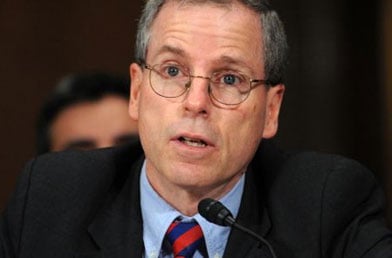
US sponsored death squads were recruited in Iraq starting in 2004-2005 in an initiative launched under the helm of the US AmbassadorJohn Negroponte, [image: right] who was dispatched to Baghdad by the US State Department in June 2004.
Negroponte was the “man for the job”. As US Ambassador to Honduras from 1981 to 1985. Negroponte played a key role in supporting and supervising the Nicaraguan Contras based in Honduras as well as overseeing the activities of the Honduran military death squads.
“Under the rule of General Gustavo Alvarez Martinez, Honduras’s military government was both a close ally of the Reagan administration and was “disappearing” dozens of political opponents in classic death squad fashion.”
In January 2005, the Pentagon, confirmed that it was considering:
” forming hit squads of Kurdish and Shia fighters to target leaders of the Iraqi insurgency [Resistance] in a strategic shift borrowed from the American struggle against left-wing guerrillas in Central America 20 years ago”.
Under the so-called “El Salvador option”, Iraqi and American forces would be sent to kill or kidnap insurgency leaders, even in Syria, where some are thought to shelter. …
Hit squads would be controversial and would probably be kept secret.
The experience of the so-called “death squads” in Central America remains raw for many even now and helped to sully the image of the United States in the region.
Then, the Reagan Administration funded and trained teams of nationalist forces to neutralise Salvadorean rebel leaders and sympathisers. …
John Negroponte, the US Ambassador in Baghdad, had a front-row seat at the time as Ambassador to Honduras from 1981-85.
Death squads were a brutal feature of Latin American politics of the time. …
In the early 1980s President Reagan’s Administration funded and helped to train Nicaraguan contras based in Honduras with the aim of ousting Nicaragua’s Sandinista regime. The Contras were equipped using money from illegal American arms sales to Iran, a scandal that could have toppled Mr Reagan.
The thrust of the Pentagon proposal in Iraq, … is to follow that model …
It is unclear whether the main aim of the missions would be to assassinate the rebels or kidnap them and take them away for interrogation. Any mission in Syria would probably be undertaken by US Special Forces.
Nor is it clear who would take responsibility for such a programme — the Pentagon or the Central Intelligence Agency. Such covert operations have traditionally been run by the CIA at arm’s length from the administration in power, giving US officials the ability to deny knowledge of it.  (El Salvador-style ‘death squads’ to be deployed by US against Iraq militants – Times Online, January 10, 2005, emphasis added)
While the stated objective of the “Iraq Salvador Option” was to “take out the insurgency”, in practice the US sponsored terror brigades were involved in routine killings of civilians with a view to fomenting sectarian violence. In turn, the CIA and MI6 were overseeing “Al Qaeda in Iraq”  units involved in targeted assassinations directed against the Shiite population. Of significance, the death squads were integrated and advised by undercover US Special Forces.
Robert Stephen Ford –subsequently appointed US Ambassador to Syria– was part of Negroponte’s team in Baghdad in 2004-2005. In January 2004, he was dispatched as U.S. representative to the Shiite city of Najaf which was the stronghold of the Mahdi army, with which he made preliminary contacts.
In January 2005, Robert S. Ford’s was appointed Minister Counselor for Political Affairs at the US Embassy under the helm of Ambassador John Negroponte. He was not only part of the inner team, he was Negroponte’s partner in setting up the Salvador Option.  Some of the groundwork had been established in Najaf prior to Ford’s transfer to Baghdad.
John Negroponte and Robert Stephen Ford were put in charge of recruiting the Iraqi death squads. While Negroponte  coordinated the operation from his office at the US Embassy, Robert S. Ford, who was fluent in both Arabic and Turkish, was entrusted with the task of establishing strategic contacts with Shiite and Kurdish militia groups outside the “Green Zone”.
Two other embassy officials, namely Henry Ensher(Ford’s Deputy) and a younger official in the political section, Jeffrey Beals, played an important role in the team “talking to a range of Iraqis, including extremists”. (See The New Yorker, March 26, 2007).  Another key individual in Negroponte’s team was James Franklin Jeffrey, America’s ambassador to Albania (2002-2004). In 2010, Jeffrey was appointed US Ambassador to Iraq (2010-2012).
Negroponte also brought into the team one of his former collaborators Colonel James Steele (ret) from his Honduras heyday:
Under the “Salvador Option,” “Negroponte had assistance from his colleague from his days in Central America during the 1980′s, Ret. Col James Steele. Steelewhose title in Baghdad was Counselor for Iraqi Security Forces supervised the selection and training of members of the Badr Organization and Mehdi Army, the two largest Shi’ite militias in Iraq, in order to target the leadership and support networks of a primarily Sunni resistance. Planned or not, these death squads promptly spiralled out of control to become the leading cause of death in Iraq.
Intentional or not, the scores of tortured, mutilated bodies which turn up on the streets of Baghdad each day are generated by the death squads whose impetus was John Negroponte. And it is this U.S.-backed sectarian violence which largely led to the hell-disaster that Iraq is today. (Dahr Jamail, Managing Escalation: Negroponte and Bush’s New Iraq Team,. Antiwar.com, January 7, 2007)
“Colonel Steele was responsible, according to Rep. Dennis Kucinich for implementing  “a plan in El Salvador under which tens of thousands Salvadorans “disappeared” or were murdered, including Archbishop Oscar Romero and four American nuns.”
Upon his appointment to Baghdad, Colonel Steele was assigned to a counter-insurgency unit known as the “Special Police Commando” under the Iraqi Interior Ministry” (See ACN, Havana,  June 14, 2006) 
Reports confirm that “the US military turned over many prisoners to the Wolf Brigade, the feared 2nd battalion of the interior ministry’s special commandos” which so happened to be under supervision of  Colonel Steele:
“US soldiers, US advisers, were standing aside and doing nothing,” while members of the Wolf Brigade beat and tortured prisoners. The interior ministry commandos took over the public library in Samarra, and turned it into a detention centre, he said.  An interview conducted by Maass [of the New York Times] in 2005 at the improvised prison, accompanied by the Wolf Brigade’s US military adviser, Col James Steele, had been interrupted by the terrified screams of a prisoner outside, he said. Steele was reportedly previously employed as an adviser to help crush an insurgency in El Salvador.” (Ibid, emphasis added)
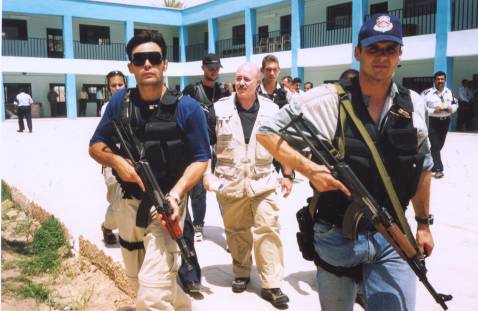
Another notorious figure who played a role in Iraq’s counter-insurgency program was Former New York Police Commissioner Bernie Kerik  [image: Bernie Kerik  in Baghdad Police Academy with body guards] who in 2007 was indicted in federal court on 16 felony charges.
Kerik walks amidst a phalanx of bodyguards during visit to the Police Academy in Baghdad, July 2003.
Kerik had been appointed by the Bush administration at the outset of the occupation in 2003 to assist in the organization and training  of the Iraqi Police force. During his short stint in 2003, Bernie Kerik –who took on the position of interim Minister of the Interior– worked towards organizing terror units within the Iraqi Police force: “Dispatched to Iraq to whip Iraqi security forces into shape, Kerik dubbed himself the “interim interior minister of Iraq.”British police advisors called him the “Baghdad terminator,” (Salon, December 9, 2004, emphasis added)
Under Negroponte’s helm at the US Embassy in Baghdad, a  wave of covert civilian killings and targeted assassinations had been unleashed. Engineers, medical  doctors, scientists and intellectuals were also targeted.
Author and geopolitical analyst Max Fuller has documented in detail the atrocities committed under the US sponsored counterinsurgency program.
The appearance of death squads was first highlighted in May this year [2005], …dozens of bodies were found casually disposed … in vacant areas around Baghdad. All of the victims had been handcuffed, blindfolded and shot in the head and many of them also showed signs of having been brutally tortured.  …
The evidence was sufficiently compelling for the Association of Muslim Scholars (AMS), a leading Sunni organisation, to issue public statements in which they accused the security forces attached to the Ministry of the Interior as well as the Badr Brigade, the former armed wing of the Supreme Council for Islamic Revolution in Iraq (SCIRI), of being behind the killings. They also accused the Ministry of the Interior of conducting state terrorism (Financial Times).
The Police Commandos as well as the Wolf  Brigade were overseen by the US counterinsurgency program in the Iraqi Ministry of the Interior:
The Police Commandos were formed under the experienced tutelage and oversight of veteran US counterinsurgency fighters, and from the outset conducted joint-force operations with elite and highly secretive US special-forces units (ReutersNational Review Online).
A key figure in the development of the Special Police Commandos was James Steele, a former US Army special forces operative who cut his teeth in Vietnam before moving on to direct the US military mission in El Salvador at the height of that country’s civil war. …
Another US contributor was the same Steven Casteel who as the most senior US advisor within the Interior Ministry brushed off serious and well-substantiated accusations of appalling human right violations as ‘rumor and innuendo’. Like Steele, Casteel gained considerable experience in Latin America, in his case participating in the hunt for the cocaine baron Pablo Escobar in Colombia’s Drugs Wars of the 1990s …
Casteel’s background is significant because this kind of intelligence-gathering support role and the production of death lists are characteristic of US involvement in counterinsurgency programs and constitute the underlying thread in what can appear to be random, disjointed killing sprees.
Such centrally planned genocides are entirely consistent with what is taking place in Iraq today [2005] …It is also consistent with what little we know about the Special Police Commandos, which was tailored to provide the Interior Ministry with a special-forces strike capability (US Department of Defense). In keeping with such a role, the Police Commando headquarters has become the hub of a nationwide command, control, communications, computer and intelligence operations centre, courtesy of the US. (Max Fuller, op cit)
This initial groundwork established under Negroponte in 2005 was implemented under his successor Ambassador Zalmay Khalilzad.  Robert Stephen Ford ensured the continuity of the project prior to his appointment as US Ambassador to Algeria in 2006,  as well as upon his return to Baghdad as Deputy Chief of Mission in 2008.
Operation “Syrian Contras”: Learning from the Iraqi Experience
The gruesome Iraqi version of the “Salvador Option” under the helm of Ambassador John Negroponte has served as a “role model” for setting up the “Free Syrian Army” Contras. Robert Stephen Ford was, no doubt, involved in the implementation of the Syrian Contras project, following his reassignment to Baghdad as Deputy Head of Mission in 2008.
The objective in Syria was to create factional divisions between Sunni, Alawite, Shiite, Kurds, Druze and Christians. While the Syrian context is entirely different to that of Iraq, there are striking similarities with regard to the procedures whereby the killings and atrocities were conducted.
A report published by Der Spiegel pertaining to atrocities committed in the Syrian city of Homs confirms an organized sectarian process of mass-murder and extra-judicial killings comparable to that conducted by the US sponsored death squads in Iraq.
People in Homs were routinely categorized as   “prisoners” (Shia, Alawite) and “traitors”.  The “traitors” are Sunni civilians within the rebel occupied urban area, who express their disagreement or opposition to the rule of terror of the Free Syrian Army (FSA):
“Since last summer [2011], we have executed slightly fewer than 150 men, which represents about 20 percent of our prisoners,” says Abu Rami. … But the executioners of Homs have been busier with traitors within their own ranks than with prisoners of war. “If we catch a Sunni spying, or if a citizen betrays the revolution, we make it quick,” says the fighter. According to Abu Rami, Hussein’s burial brigade has put between 200 and 250 traitors to death since the beginning of the uprising.” (Der Spiegel, March 30, 2012)
The project required an initial program of recruitment and training of mercenaries. Death squads including Lebanese and Jordanian Salafist units entered Syria’s southern border with Jordan in mid-March 2011.  Much of the groundwork was already in place prior to Robert Stephen Ford’s arrival in Damascus in January 2011.
Ambassador Ford in Hama in early July 2011
Ford’s appointment as Ambassador to Syria was announced in early 2010. Diplomatic relations had been cut in 2005 following the Rafick Hariri assassination, which Washington blamed on Syria. Ford arrived in Damascus barely two months before the onset of the insurgency.
The Free Syrian Army (FSA)

Washington and its allies replicated in Syria the essential features of the “Iraq Salvador Option”, leading to the creation of the Free Syrian Army (FSA) and its various terrorist factions including the Al Qaeda affiliated Al Nusra brigades.
While the creation of the Free Syrian Army (FSA) was announced in June 2011, the recruitment and training of foreign mercenaries was initiated at a much an earlier period.
In many regards, the Free Syrian Army is a smokescreen. It is upheld by the Western media as abona fide military entity established as a result of mass defections from government forces.  The number of defectors, however, was neither significant nor sufficient to establish a coherent military structure  with command and control functions.
The FSA  is not a professional  military entity, rather it is a loose network of separate terrorist brigades, which in turn are made up of numerous paramilitary cells operating in different parts of the country.
Each of these terrorist organizations operates independently. The FSA does not effectively exercise command and control functions including liaison with these diverse paramilitary entities. The latter are controlled by US-NATO sponsored special forces and intelligence operatives which are embedded within the ranks of selected terrorist formations.
These (highly trained) Special forces on the ground (many of whom are employees of private security companies) are routinely in contact with US-NATO and allied military/intelligence command units (including Turkey). These embedded Special Forces are, no doubt, also involved in the carefully planned bomb attacks directed against government buildings, military compounds, etc.
The death squads are mercenaries trained and recruited by the US, NATO, its Persian Gulf GCC allies as well as Turkey.  They are overseen by allied special forces (including British SAS and French Parachutistes), and private security companies on contract to NATO and the Pentagon. In this regard, reports confirm the arrest by the Syrian government of some 200-300 private security company employees who had integrated rebel ranks.
The Jabhat Al Nusra Front
The Al Nusra Front –which is said to be affiliated to Al Qaeda– is described as the most effective “opposition” rebel fighting group, responsible for several of the high profile bomb attacks. Portrayed as an enemy of America (on the State Department list of terrorist organizations), Al Nusra operations, nonetheless, bear the fingerprints of US paramilitary training, terror tactics and weapons systems. The atrocities committed against civilians by Al Nusra (funded covertly by US-NATO) are similar to those undertaken by the US sponsored death squads in Iraq.
In the words of Al Nusra leader Abu Adnan in Aleppo: “Jabhat al-Nusra does count Syrian veterans of the Iraq war among its numbers, men who bring expertise — especially the manufacture of improvised explosive devices (IEDs) — to the front in Syria.”
As in Iraq, factional violence and ethnic cleansing were actively promoted. In Syria, the Alawite, Shiite and Christian communities have been the target of the US-NATO sponsored death squads.  The Alawite and the Christian community are the main targets of the assassination program. Confirmed by the Vatican News Service:
Christians in Aleppo are victims of death and destruction due to the fighting which for months, has been affecting the city. The Christian neighborhoods, in recent times, have been hit by rebel forces fighting against the regular army and this has caused an exodus of civilians.
Some groups in the rugged opposition, where there are also jiahadist groups, “fire on Christian houses and buildings, to force occupants to escape and then take possession [ethnic cleansing] (Agenzia Fides. Vatican News, October 19, 2012)
“The Sunni Salafist militants – says the Bishop – continue to commit crimes against civilians, or to recruit fighters with force. The fanatical Sunni extremists are fighting a holy war proudly, especially against the Alawites. When terrorists seek to control the religious identity of a suspect, they ask him to cite the genealogies dating back to Moses. And they ask to recite a prayer that the Alawites removed. The Alawites have no chance to get out alive.”  (Agenzia Fides 04/06/2012)
Reports confirm the influx of Salafist and Al Qaeda affiliated death squads as well as brigades under the auspices of the Muslim Brotherhood into Syria from the inception of the insurgency in March 2011.
Moreover, reminiscent of  the enlistment of  the Mujahideen to wage the CIA’s jihad (holy war) in the heyday of the Soviet-Afghan war, NATO and the Turkish High command, according to Israeli intelligence sources, had initiated”
“a campaign to enlist thousands of Muslim volunteers in Middle East countries and the Muslim world to fight alongside the Syrian rebels. The Turkish army would house these volunteers, train them and secure their passage into Syria. (DEBKAfile, NATO to give rebels anti-tank weapons, August 14, 2011).
Private Security Companies and the Recruitment of Mercenaries
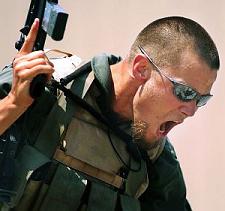
A Secret Army of Mercenaries for the Middle East and North AfricaAccording to reports, private security companies operating out of Gulf States are involved in the recruiting and training of mercenaries.
Although not specifically earmarked for the recruitment of mercenaries directed against Syria, reports point to the creation of  training camps in Qatar and the United Arab Emirates (UAE).
In Zayed Military City (UAE), “a secret army is in the making” operated by Xe Services, formerly Blackwater.  The UAE deal to establish a military camp for the training of mercenaries was signed in July 2010, nine months before the onslaught of the wars in Libya and Syria.
In recent developments, security companies on contract to NATO and the Pentagon are involved in training “opposition” death squads in the use of chemical weapons:
The United States and some European allies are using defense contractors to train Syrian rebels on how to secure chemical weapons stockpiles in Syria, a senior U.S. official and several senior diplomats told CNN Sunday. ( CNN Report,December 9, 2012)
The names of the companies involved were not revealed.
Behind Closed Doors at the US State Department
Robert Stephen Ford was part of a small team at the US State Department team which oversaw the recruitment and training of  terrorist brigades,  together with Derek Chollet  and Frederic C. Hof, a former business partner of Richard Armitage, who served as Washington’s “special coordinator on Syria”. Derek Chollet has recently been appointed to the position of Assistant Secretary of Defense for International Security Affairs (ISA).
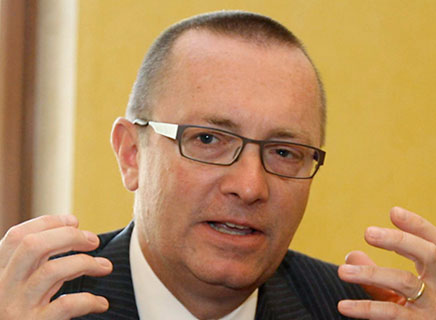
This team operated under the helm of  (former) Assistant Secretary of State for Near Eastern AffairsJeffrey Feltman.
Feltman’s team was in close liaison with the process of recruitment and training of mercenaries out of Turkey, Qatar, Saudi Arabia and Libya (courtesy of the post-Gaddafi regime, which dispatched six hundred Libya Islamic Fighting Group (LIFG) troops to Syria, via Turkey in the months following the September 2011 collapse of the Gaddafi government).
Assistant Secretary of State Feltman was in contact with Saudi Foreign Minister Prince Saud al-Faisal, and Qatari Foreign Minister Sheikh Hamad bin Jassim. He was also in charge of a  Doha-based office for “special security coordination” pertaining to  Syria, which included representatives from Western and GCC intelligence agencies well as a representative from Libya. Prince Bandar bin Sultan. a prominent and controversial member of Saudi intelligence was part of this group. (See Press Tv, May 12, 2012).
In June 2012, Jeffrey Feltman (image: Left) was appointed UN Under-Secretary-General for Political Affairs, a strategic position  which, in practice, consists in setting  the UN agenda (on behalf of Washington) on issues pertaining to “Conflict Resolution” in various “political hot spots” around the world (including Somalia, Lebanon, Libya, Syria, Yemen and Mali). In a bitter irony, the countries for UN “conflict resolution” are those which are the target of  US covert operations.
In liaison with the US State Department, NATO and his GCC handlers in Doha and Riyadh, Feltman is Washington’s man behind UN special envoy Lakhdar Brahmi’s “Peace Proposal”.
Meanwhile, while paying lip service to the UN Peace initiative, the US and NATO have speeded up the process of recruitment and training of  mercenaries in response to the heavy casualties incurred by “opposition” rebel forces.
The US proposed “end game” in Syria is not regime change, but the destruction of Syria as a Nation State.
The deployment of “opposition” death squads with a mandate to kill civilians is part of this criminal undertaking.
“Terrorism with a Human Face” is upheld by the United Nations Human Rights Council, which constitutes a mouthpiece for NATO “Humanitarian Interventions” under the doctrine of “Responsibility to Protect” (R2P).
The atrocities committed by the US-NATO death squads are casually blamed on the government of Bashar Al Assad. According to UN Human Rights Council High Commissioner Navi Pillay:
“This massive loss of life could have been avoided if the Syrian Government had chosen to take a different path than one of ruthless suppression of what were initially peaceful and legitimate protests by unarmed civilians,” (quoted in Stephen Lendman, UN Human Rights Report on Syria: Camouflage of US-NATO Sponsored Massacres, Global Research, January 3, 2012)
Washington’s “unspeakable objective” consists in breaking up Syria as a sovereign nation –along ethnic and religious lines– into several separate and “independent” political entities.
READ MORE

What Should We Do?

Posted by FS On Wednesday, 9 January 2013 0 comments

What Should We Do
I am a Pakistani — born here,educated here and after working all over the world living here in Pakistan. I pay taxes — on all my income and my assets. In my home there is no gas,power only for three or four hours out of twenty four and the water supply is frequently disrupted. The street on which I live is broken and strewn with garbage. The street lights are rarely on even when there is power. I have a generator and I run it in spite of the high diesel cost but it is weakening because of the long hours that it has to be run — I suppose I will have to get a new one or maybe two of them so that they can be alternated. We have installed gas cylinders for cooking and heating. We have a UPS system that takes over when there is a power shutdown and the generator is not running. The tap water is not safe to drink so we have bottled water delivered to us — the delivery man refuses to give a proper receipt to avoid paying the heavy tax on bottled water but charges us the full amount. We have no choice. Whenever there is a power shutdown the cable TV goes off so we have a PTCL smart TV connection that takes over and maybe we will install a satellite connection. I am among the fortunate few who can afford all this but I often wonder what the others are doing — those who cannot afford all this. What should they do?

My banker tells me that the Rupee is going to fall against the dollar so I should keep all my cash in dollars. Others tell me to take all my money out of the country and keep it abroad because there is going to be a financial collapse. In any case I feel very vulnerable because if you keep money in the bank then bank employees who are in cahoots with criminals inform them and you could be kidnapped. Not only are you unsafe but you put your family members at risk also. The daily kidnappings are proof that this is all true. The high up government people and our political leaders live behind secured walls and ride in bullet proof cars with huge security details and now we are told that many of them do not pay taxes. This is also proof that the environment is totally unsafe. What should we do?
There is a money making frenzy all around us. Government agencies are getting into partnership with private enterprises and allowing them to use government land for commercial purposes. At every level we have to pay bribes. The services being provided are sub standard and there are no work ethics and no consideration for others. The mindless speeding on our roads in complete disregard for traffic rules is an example of our descent into chaos. The man in the extreme left lane thinks it is his birth right to cut in front of you to turn right. He also thinks he can go the wrong way on a one way lane to avoid a proper U turn. With traffic signals off because of the power cuts it is a free for all at every crossing except when a VIP has to pass and all traffic is brought to a standstill and then suddenly released with no thought for the consequences. Miserable ill clad and scrawny children and women are begging on the streets with no one bothered about them. There is a stressful threat situation all around — religious leaders threaten you,religious extremists and criminals threaten you,the police threaten you in fact that is all they do and the government threatens you in every possible way. There is no human security. What should we do?
We are told that our economy is in free fall and that countries like India,Bangladesh,Indonesia,Thailand and Malaysia are forging ahead. We are in limbo — caught between India,Afghanistan and the US. No one is investing here because of the security situation. Our airline is in shambles. So are our railways. People are being killed in random drive-by shootings all over the country.  What should we do?
This is our country. We need to save it. We need to reform it. Everyone says it can be done. This is what we should be doing — the sooner the better.
READ MORE

UN to strike off terrorists’ names from list

Posted by FS On 0 comments

The United Nations (UN) is likely to remove the names of some important Taliban leaders from its list of terrorists soon following US-backed joint efforts by Pakistan and Afghanistan, a...
The United Nations (UN) is likely to remove the names of some important Taliban leaders from its list of terrorists soon following US-backed joint efforts by Pakistan and Afghanistan, a development that will fulfil a major condition of Mullah Omar-led Afghan insurgents to participate in the reconciliation process.
It was in April last year that the US, Pakistan and Afghanistan agreed on a “Safe Passage Mechanism” for the Taliban leaders who wanted to enter into the intra-Afghan dialogue.
The move was aimed at facilitating the safe travel of Taliban negotiators to various countries for peace talks.
Senior Taliban leaders like Maulvi Shahabuddin Dilawar, who recently participated in informal peace talks in Paris along with Afghan authorities and members of other Afghan groups, is said to have taken advantage of the agreement on ‘safe passage’ between Islamabad, Kabul and Washington.
The Paris talks were held after the UN Security Council allowed an exemption last month to some blacklisted Taliban leaders to travel outside Afghanistan for peace and reconciliation talks. The UN Security Council, however, renewed its Taliban sanctions regime.
There are around 130 Taliban individuals and four entities on the UN Security Council’s sanctions list.
Islamabad and Kabul have been working for removal of some Taliban leaders from the UN terrorist list to impress upon Mullah Omar and his close aides to enter peace negotiations with Kabul. These efforts enjoy the support and backing of Washington as well.
“The joint efforts by Pakistan and Afghanistan, which are backed by Washington, seem to be proving fruitful and we could soon see the removal of names of senior Taliban leaders, around 10 in number, from the UN terrorists’ list,” a Pakistani diplomat based in Washington said. He said the removal of Taliban leaders’ names from the UN list meant for terrorists would be a significant step, as it would result in the fulfillment of an important condition that the Taliban have come up with for joining the Afghan reconciliation process.
Before, throwing its support to Kabul’s efforts for the removal of Taliban leaders’ names from UN terrorists’ list, Islamabad released as many as 26 Taliban prisoners, including former Taliban justice minister Mullah Nooruddin Turabi, to help bring the Taliban leaders to the table of negotiations.
Islamabad also agreed with the Karzai government on holding a ‘Joint Ulema Conference’ in Kabul this month as part of peace efforts in the war-torn country. An Afghan diplomat privy to the ongoing peace and reconciliation efforts in Afghanistan also confirmed the joint efforts by Islamabad and Kabul.
Requesting not to be named, he said Afghan President Hamid Karzai, who is to visit Washington soon, would also take up that vital issue with President Barack Obama and other senior American officials.
Noted security and defence analyst Muhammad Amir Rana told Pakistan Today that the Taliban wanted to know how serious the US was in the peace and reconciliation process and they (Taliban) had come up with some demands, including removal of their names from the UN terrorists’ list, to ascertain the same.
“The removal of Taliban names from the UN terrorists’ list would be an important confidence building measure and it will help persuade the Taliban to join the peace and reconciliation process in Afghanistan,” he said.
READ MORE

IT’S a good plan in theory: an end to foreign interference, a “national dialogue” to prepare a charter, a referendum for popular ratification and then a parliamentary election. Speaking to...
IT’S a good plan in theory: an end to foreign interference, a “national dialogue” to prepare a charter, a referendum for popular ratification and then a parliamentary election.
Speaking to a packed crowd at a cultural centre in Damascus on Sunday, President Bashar al-Assad denounced his opponents in strong terms, calling them “Western puppets” and “enemies of God” and said his forces would call off fighting if foreign powers stopped arming the dissidents. Appearing in public for the first time in six months, the president surprised the world by his confidence and, after the speech, was mobbed in scenes that observers called well-choreographed. But the end-result was a road map that has little chance of success. The Syrian National Coalition, which comprises different opposition groups, rejected the plan and called for his ouster. Pro-dissident powers denounced the plan, Turkey saying there was nothing new in it, while the US and the European Union called upon the president to quit. Iran alone welcomed the Assad speech, saying it could stop violence and lead to a negotiated settlement.
A peaceful solution is what Syria’s well-wishers want. But so much blood has been spilled over the last 21 months and the rival sides have adopted such hard-line positions it is difficult to see how they can negotiate across the table. Already, the character of the conflict has deviated from the ideals of the Arab Spring, for the entry of extremist elements, especially those loyal to Al Qaeda, has given it a sectarian hue. Yet that shouldn’t serve to hide the Baathist regime’s regional and international isolation. Frankly, there are no powers or elements, internal or external, which can truly be called impartial and genuinely interested in a peaceful solution. With neither side in a position to win militarily, the slaughter in Syria is likely to continue.
READ MORE

China’s delicate balance between the two Sudans

Posted by FS On 0 comments

China’s political and economic foray into Africa almost resembles the West’s exportation of its liberal democratic institutions through military occupation and reconstruction. Its economic model, state-led capitalism, however, has been...
China’s political and economic foray into Africa almost resembles the West’s exportation of its liberal democratic institutions through military occupation and reconstruction. Its economic model, state-led capitalism, however, has been far more useful in Africa. The profound relations China has with its African partners provide the opportunity for it to expand its leverage over the countries while maintaining mutual benefits.
Yet, China has not always been active in its investment deals in Africa. The 80s was a decade of economic death spell for the country, as it could not compete with western aid. As China began its ascent on the world stage as an economic power in the 90s, it needed oil and resources, and thus turned its attention on Africa once again, especially towards Sudan’s oil industry.
When the rest of the world stayed away, the China National Petroleum Corporation (CNPC) went ahead with its investments while the civil war raged on in Darfur. It became the biggest investor in Sudan, importing 70 percent of Sudan’s total oil exports in 2010. This engagement with China has changed Africa’s landscape. China is now Africa’s largest trading partner, having overtaken the United States in 2009.
As Chinese companies make serious advancements, becoming Sudan’s largest customer, western companies, on the other hand, are compelled to withdraw due to the civil war and human rights abuses by the Sudanese government. Further, the US relations with Sudan has been apprehensive ever since Omar al-Bashir seized power in 1989 and adopted a militant Islamist approach, playing host to several jihadists, including Osama bin Laden.
China needs both countries
In comparison, China dangles the complete package with money, technical expertise, and its leverage in the UN Security Council shield the country from international sanctions. In May 2012, China initially resisted a UN resolution that threatens Sudan and South Sudan with additional measures under article 41 of the UN Charter, which allows countries to impose economic and diplomatic sanctions if the countries fail to ignore their decisions. The council was voting on sanctioning on the countries if they fail to comply with demands to halt the escalating conflict.
Sudan and South Sudan seceded in 2011 after decades of civil war, which cost the lives of more than 2 million people. In early 2012, tensions were heightened once again following the fall out over oil revenues and border demarcations. Sudan confiscated the South’s crude claiming that the latter owed transit fees. South Sudan responded by shutting off its production and losing more than 98 percent of its income. By doing so, both countries are at the losing end: while 75 percent of the oil lies within the South, most of the pipelines run north.
China has been ratcheting up its investments, expanding new trade routes and forging new alliances in the newly independent South. Traditionally the ally of the Khartoum government, Beijing is heavily courting South Sudan with visits from senior officials and they became the first to establish a consulate general in Juba. They made efforts to assure continued access to its oil investments while providing arms to the North.
China needs both countries – while South Sudan has the oil, Sudan has the pipelines and refining equipment. But as it expands its unique brand of development aid into Sudan and South Sudan, stronger ties develop, and China cannot remain a passive investor.
With the “non-intervention” rule, investments flow into the country without any political conditionality. This has generally guided China’s foreign policy agenda in the developing world and has been popular with the African leaders, as it does not require a commitment to democratic standards. This was deeply challenged when the conflict broke out in 2012.
An illuminating summary by Alex de Waal, Executive Director of World Peace Foundation at Tufts University, aptly captured China’s response to its estrangement:
China has taken a very simple position with regard to both parties, which is that it wants to see oil production and export resumed by a fair agreement as soon as possible, and it has pressed both parties to negotiate seriously under the facilitation of the African Union. It has shown no interest in any other solution than utilising the existing infrastructure, which was built by the Chinese for this purpose. So it has played a low-key but very consistent and firm role.
Pragmatic engagement
Most of the oil that flows through the pipelines goes to China. Their vested interest in this conflict has resulted in a shift in their non-interference policy. China played its first shuttle diplomacy by sending a special envoy to broker the tensions. China’s economic need has forced it to intervene in the domestic politics of another country.
While some may see this as a changefrom the five principles of peaceful co-existence that China usually undertakes, it is too optimistic to argue that this is substantive. Beijing flirts with the powerful domestic actors and dips its foot into their internal affairs when there is an immediate necessity, such as when its access to strategic resources is imperiled or an interference with its own domestic politics.
Even though this pragmatic engagement may be unsettling for it relegates good governance and threatens to displace the West’s careful crafted plan of transparency and democracy, it is still useful.
In 2008, using its ties with Sudan, China quietly pressed Darfur to accept UN peacekeeping forces. It must, however, be noted that although this step may be outside China’s diplomatic normalcy, it was executed under the situation where a barrage of criticisms was levelled against the country for its close ties with Sudan just when the Beijing Olympics was about to occur. To save its image as the host of one of the grandest international events, China had little choice but to modify its foreign policy.
And in May 2012, during the UN resolution to impose sanctions on Sudan to stop the killing, China eventually did not abstain, or veto the vote. While unusual, the ghost of Chen Guangcheng’s fiasco hovered above bleakly suggesting China is not a new human rights convert.
For sure, China will never champion democracy and aid Sudan in its post-war governmental transitions. It will be the responsibility of the West to do so. But instead of perceiving China as a threat that undermines the West’s agenda, one should see it as a convenient partner of Sudan. To defend its own business interests, it must undertake less parochial ways, even if it means quietly pressurising a country to abide by international norms.
Most revealing is this 
 from a Chinese official during an interview with the International Crisis Group: “We cannot just be bystanders; we need to be a player. Can you imagine how any Western country would engage if they had all these interests?”
The advantages of exporting China’s economic model is that it serves the interest of both parties while inexorably tying them together. The dilemma, then, that China has placed itself in will continue to challenge their non-interference as a foreign policy.
READ MORE

Thugs are not revolutionaries

Posted by FS On 0 comments

MQM’s Altaf Bhai is walking on a tightrope and he is managing this delicate task with political skill one would not have expected from the loud,often eccentric,politician. How does one plan a long march against the very government they have a coalition with,and at the same time assure them that there shall be no parting of ways? Apparently,MQM can.
It is easy to see MQM’s game in the entire Tahir ul Qadri saga. Here is a political party largely unpopular in most quarters of Pakistan,securing its constituency via dirty tactics that has caused its leader to flee the country. Often the butt of political jokes,MQM is not a force one takes seriously in national politics unless Karachi is specifically analyzed. This has changed with the new love affair between Qadri and Altaf. While Qadri’s agenda might be questionable,MQM’s agenda is not. Hop on the bandwagon,take a long march to Islamabad and try to get some leverage and position in the interim government negotiations. If that fails,hey,there is still a coalition with the country’s largest political party to fall back on.
Qadri,on the other hand,is not so easy to read. There have been so many conspiracy theories going around that it is hard to keep track,and much harder to understand this sudden jolt to our political system. Some say it is a Saudi conspiracy. Others say it is conspiracy by the United States. Others,still,allege that it is the hidden hand of the establishment in manipulating the flailing democracy of Pakistan.
Whatever it is,Qadri is a game changer. Despite a very good advice by Altaf bhai to Rehman Malik to talk to the Qadri himself,no political party has made direct contact with the controversial figure. PML-N and PPP,like two estranged lovers finally reuniting,passed a resolution the Punjab Assembly condemning Qadri’s threat of a long march. Similarly,there is a petition in the Lahore High Court demanding the courts to ban Qadri from proceeding with the long march.
Qadri himself has claimed that he will lead a march of around 300,000 people to Islamabad. A long march at such a scale means arranging transport and gathering supporters. Qadri claims he has gone even beyond that. Apparently,he has arranged for blankets and dry rations people who will camp at Islamabad in this winter of 2013 until Qadri’s demands are met – whatever they may be. That puts to question the massive funds Qadri has at his disposal to arrange such an activity. He keeps saying it is group of followers who have donated to his cause. But one cannot help but be skeptical to that.
One thing that must be pointed out is that this call by the Qadri and Altaf Hussain to lead a long march to Islamabad is not a revolution. It is political bullying,especially because it comes at a time when the interim government is about to be announced. Revolutions are a complete upheaval of the system. What Qadri is calling for,or what he is perceived to be calling for,is a technocratic interim set up.
That problem with that is the fact that a technocratic government is not a democratic government. Yes,we do have recycled faces representing our people. But as recycled as they may be,they are elected representatives of the people. In his eagerness to uphold the constitution,Qadri is forgetting that it may just end up alienating it,by inviting a group of technocrats to run the Pakistani government.
There is no question that Qadri means business,and Altaf Hussain is just tagging along for the ride. Together,they have managed to shake up the senate and the cabinet,both of whom have insisted that it is not the establishment that is behind his untimely return. What remains to be seen is what the repercussions of his long march will have on Pakistan and how it will reflect internationally.
If it goes smoothly,it would be the first democratic transition in Pakistan. It has met a lot of bumps on the road and the biggest one yet is Qadri’s impending long march. The army may not be coming in,but what remains to be seen is whatever form of government that does come in,how effective will it be in carrying Pakistan forward.
By Maryam Rehman
READ MORE

Rebels fight to take over Syrian military airbase

Posted by FS On 0 comments

Rebels have stormed parts of Taftanaz military airport in Syria’s northwest Idlib province, but state media reported on Thursday that the fighters had been repelled by troops. A rebel speaking from near the Taftanaz base overnight said...
Rebels have stormed parts of Taftanaz military airport in Syria’s northwest Idlib province, but state media reported on Thursday that the fighters had been repelled by troops.
A rebel speaking from near the Taftanaz base overnight said the base’s main sections were still in loyalist hands but fighters had managed to infiltrate and destroy a helicopter and a warplane on the ground.
Rami Abdulrahman, head of the opposition-aligned Syrian Observatory for Human Rights which monitors the conflict from Britain, said as many as 800 fighters were involved in the assault, including Islamists from Jabhat al-Nusra, a powerful group that Washington considers a terrorist organisation.
Taftanaz is mainly a helicopter base, used for missions to resupply army positions in the north, many of which are cut off by road because of rebel gains, as well as for dropping crude “barrel bombs” of explosives on rebel-controlled areas.
Rebels have been besieging air bases across the north in recent weeks, in the hope it will reduce the government’s power to carry out air strikes and resupply regime-held areas.
Near Minakh, another northern air base that rebels have surrounded, government forces have retaliated by regularly
shelling and bombing nearby towns.
Ongoing airstrikes
Meanwhile, opposition activists said warplanes struck a residential building in another rebel-held northern town, Hayyan, killing at least eight civilians.
Video footage showed men carrying dismembered bodies of children and dozens of people searching for victims in the rubble of the destroyed building, shouting: “God is greatest.”
The provenance of the video could not be independently confirmed.
In addition to their tenuous grip on the north, the rebels also hold a crescent of suburbs on the edge of Damascus, which have come under bombardment by government forces that control the centre of the capital.
On Wednesday, according to opposition activists, dozens of people were incinerated in an inferno caused by an airstrike on a petrol station in a Damascus suburb where residents were lining up for precious fuel.
The civil war in Syria has become the longest and bloodiest of the conflicts that rose out of uprisings across the Arab
world in the past two years.
More than 60,000 people have been killed in the 21-month-old uprising and civil war, the UN said this week, sharply raising the death toll estimate in a conflict that shows no sign of ending.
READ MORE

The preferential trade agreement (PTA) between Pakistan and Indonesia will be implemented during the current month, said Commercial Secretary of the Indonesian Embassy in Pakistan, Otto R Gani said here...
The preferential trade agreement (PTA) between Pakistan and Indonesia will be implemented during the current month, said Commercial Secretary of the Indonesian Embassy in Pakistan, Otto R Gani said here Thursday.
“Jakarta and Islamabad have completed the spadework following the successful meetings between the top officials of two countries during the D-8 Summit held recently in Islamabad,” Gani said while talking to a delegation of Islamabad Women Chamber of Commerce and Industry (IWCCI).
He said that implementation of Pakistan-Indonesia PTA would begin new era of cooperation and serve as a foundation for enhanced economic and trade cooperation. The Pakistani businesses will increase exports to Southeast Asia’s largest economy under the PTA, including textile exports, he added.
“After the implementation of PTA, we will take further steps to broader economic integration by initiating negotiations on a free trade agreement (FTA),” he added.
He assured the IWCCI delegation that the Indonesian Embassy as well as business community would participate in Islamabad Expo 2013 scheduled in March, which would offer an opportunity to develop linkages among the business people of the two countries.
Speaking on the occasion, founder president IWCCI Samina Fazil and President IWCCI of the chamber Farida Rashid said that an operational PTA would provide a level playing field to the major palm oil exporters and it could help reduce prices of edible oil in Pakistan. Before 2007 Indonesian palm oil share in Pakistani market was 55 per cent which can rebound now, they added.
Similarly, Pakistan’s export to Indonesia including value-added textiles, carpets, fabrics, leather and export goods, chemicals, surgical and fruits will get a boost.
The IWCCI leaders demanded the government to take initiatives, including single country expos, exchange of delegations and cultural events to bring the business communities of the two countries closer.
READ MORE