Showing posts with label Afghanistan. Show all posts
Showing posts with label Afghanistan. Show all posts

The heads of Senate Standing Committees on Foreign Relations and Defence on Sunday expressed concern over the government’s move to shift its policy on the civil war in Syria after the visit of a high-profile dignitary from Saudi Arabia.
Chairmen of the two committees Haji Mohammad Adeel and Mushahid Hussain Sayed said any attempt by the government to intervene in Syria for regime change would be strongly opposed and rejected.
Last week, Saudi Arabia and Pakistan authorities had called for ‘the formation of a transitional governing body in Syria with full executive powers enabling it to take charge of the affairs of the country’.
“We have already passed a unanimous resolution in the (Senate) committee calling on the government to be neural about (efforts at) regime change in Syria,” said Senator Haji Mohammad Adeel talking to The Express Tribune.
He said the committee passed the resolution in the presence of Adviser to the Prime Minister on National Security and Foreign Affairs Sartaj Aziz and the Foreign Office officials.
“The government cannot go against the national consensus while changing a policy on Syria,” he maintained.
He said Senate’s Foreign Relations Committee would soon meet about the latest development pertaining to Syria, Afghanistan, Iran and Saudi Arabia and would ask the government to explain if any policy change had taken place on these countries.
“Our government should avoid attempts to change regime in Syria from outside,” Senator Mushahid Hussain said.
He said that he had already talked to Sartaj Aziz, who had stated it was just a follow-up meeting of the consensus reached in Geneva about Syria and not any policy shift.
“There would be serious implications of any interference by Pakistan in the Syrian civil war,” said Mushahid. “National consensus is the key to taking any stance on Damascus. The government should avoid making any attempt unilaterally,” he added.
PPP Senator Farhatullah Babar has asked the PM’s adviser to take the upper house into confidence on this ‘matter of great public importance’ as there seemed a sudden, unexplained and a major departure from the known and stated position of Pakistan on this issue.

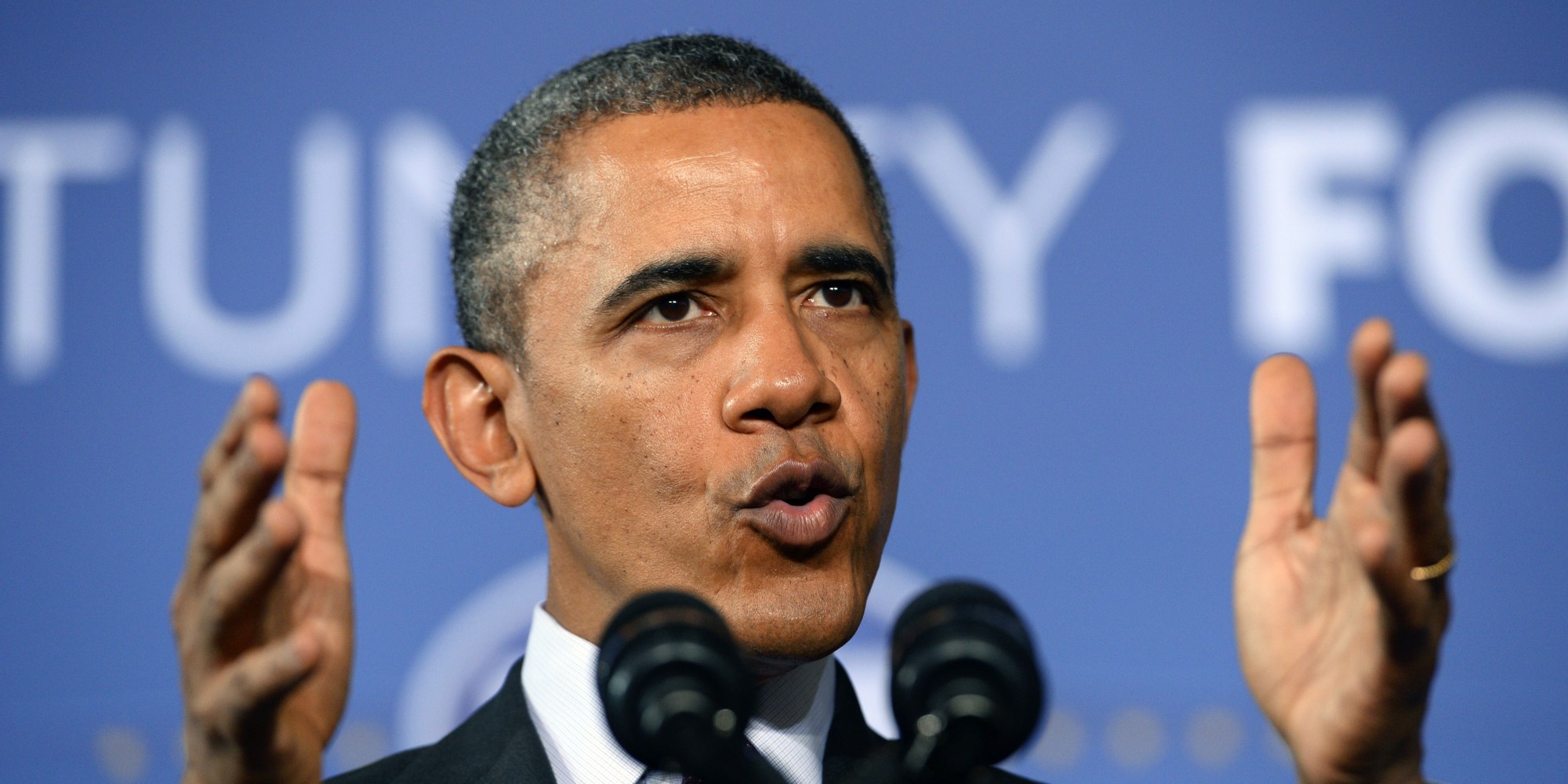
The United States is considering a proposal to withdraw all its troops from Afghanistan by 2017, say two Republicans as official sources confirm that “the zero-option” was also discussed at a White House meeting on Tuesday.
President Barack Obama and Vice President Joe Biden met Defence Secretary Chuck Hagel and senior US generals at the White House to review their options in Afghanistan. Gen Joseph F. Dunford Jr, commander of US and allied forces in Afghanistan, came from Kabul to attend the meeting.
Gen Martin E. Dempsey, the chairman of the Joint Chiefs of Staff, and the vice chairman, Adm James A. Winnefeld Jr; Gen Lloyd J. Austin III, the head of the United States Central Command; and Adm William H. McRaven, head of the United States Special Operations Command, also participated in the discussion.
Separately, the White House reconfirmed its plan to withdraw all but a small residual force from Afghanistan by the end of 2014.
“Together with our allies, we will complete our mission there by the end of this year. And America’s longest war will finally be over,” White House Press Secretary Jay Carney told a briefing.
The United States, however, wants to keep a residual force of about 10,000 after 2014 as well, provided the Afghan government signs a bilateral security agreement.
But on Tuesday evening, two senior Republican Senators, John McCain and Lindsey Graham, told reporters that
And this caused Afghan President Hamid Karzai to move away from the United States and hold secret talks with the Taliban, they argued.
The White House Press Secretary did not directly confirm that the administration was considering such a plan but when asked to comment on the statement by the two senators, he said: “Some senators envision a world in which US troops remain in Afghanistan for decades. Some senators envisioned a world in which US troops remained in Iraq for decades. That’s not the president’s vision.”
Although the US media reported that the Obama administration was upset with Mr Karzai for holding secret talks with the Taliban, the State Department welcomed the talks.
“It’s important to note here that we’ve long strongly supported an Afghan-led reconciliation, which would, of course, be Afghans talking to Afghans,” State Department spokeswoman Jen Psaki said. “So the notion that we wouldn’t support that dialogue is inaccurate.”
The US, however, was not talking to the Taliban, she added.
In a report on President Obama’s meeting with his generals, The New York Times said that the Pentagon too was not against the “zero option”.
“The feeling among the generals is that, ‘Hey, if Karzai doesn’t sign this thing, we are fine with pulling back to zero’,” a senior Pentagon official told NYT.
“Moving to zero troops no longer seems unthinkable, especially with alternatives like drones available,” the official added.
The report said that Vice President Biden had been pressing officials with sceptical questions of what a residual force would accomplish, and aides to Mr Obama have suggested alternatives that would result in a lower troop presence than the military would prefer.
US generals want at least 10,000 American and 5,000 Nato troops in Afghanistan after 2014, saying that if the Afghan government does not accept this deployment, the United States should withdraw all its forces.

National Security Adviser Sartaj Aziz, who met US Defence Secretary Chuck Hagel on Tuesday, has said that only a regional approach of total non-interference can bring peace and stability to Afghanistan.
At his meeting with Secretary Hagel and Chairman Joint Chiefs of Staff General Martin Dempsey, Mr Aziz also “underscored Pakistan’s commitment to… facilitating US drawdown from Afghanistan”, said an official statement.
Earlier, Mr Aziz conceded that the US plan to withdraw most of its troops from Afghanistan by the end of this year would create a vacuum in Afghanistan, but warned that this “vacuum should only be filled by Afghans, not outsiders”.
At the Pentagon meeting, Mr Aziz said that “a forward looking, broad-based and enduring defence partnership between Pakistan and the US is critical for security and stability in the region”.
The adviser, who is visiting Washington for the US-Pakistan Strategic Dialogue, also said that Pakistan would not “pressurise Afghanistan” to sign a security agreement with the United States.
Mr Aziz said that while experts felt the proposed security agreement would help stabilise Afghanistan, Pakistan believed that “it’s for the Afghans to decide whether they want to do this deal”.
He said that Pakistan and the US were also working on a framework for defence reimbursement after 2014 when the United States plans to pull most of its combat troops from Afghanistan.
US officials will present their reimbursement proposals at a joint meeting in February, Mr Aziz said.
He visited the Pentagon with Defence Minister Khawaja Muhammad Asif, Ambassador Jalil Abbas Jilani, Secretary Defence Asif Yasin Malik and Chief of the General Staff Lt-Gen Ishfaq Nadeem Ahmad.
The meeting focused on security cooperation and identified key priorities for the strengthening the defence partnership in the future.
Mr Aziz noted that positive momentum in defence exchanges over the last one year had helped both sides make significant progress in a number of areas such as supply routes, counter-IEDs cooperation and counter-terrorism.
Talking to journalists, Mr Aziz said there could be no peace in Afghanistan unless all countries of the region followed the same policy of non-interference and “have no favourites in that country”.

After more than thirteen years of security operations in Afghanistan by the United States and her NATO allies, the future of Afghanistan still remains uncertain – and so does the peace and security of the Central and South Asian regions
It has been over 152 months since the United States Armed Forces launched Operation Enduring Freedom in retaliation to the 9/11 terrorist attacks on the World Trade Center and the Pentagon. America’s NATO allies also joined in the military invasion of the landlocked country, invoking Article 5 of the Washington Treaty of the North Atlantic Alliance for the first time since the creation of the “Allied” alliance that was primarily directed to respond to an attack from the Soviet Union on the West. The Article stated that an attack on one or more of the NATO countries would constitute an attack on all NATO allies, “each of them, in exercise of the right of individual or collective self-defense recognized by Article 51 of the Charter of the United Nations, will assist the Party or Parties so attacked by taking forthwith, individually and in concert with the other Parties, such action as it deems necessary, including the use of armed force, to restore and maintain the security of the North Atlantic area”. Though a NATO operation in Afghanistan seemed far-fetched at the time, since the Alliance’s main theater of operations was Europe – or anywhere they (or democracy, as they were protecting) were threatened by the former Soviet Union – but NATO’s “Strategic Concept” after the collapse of the Soviet Union had already accounted for and recognized the threat of international terrorism posed by transnational groups which may or may not have state support. Such a strategic realignment of the Alliance was necessary given that their principal adversary had ceased to exist in 1991. The new Strategic Concept was finalized and approved by the Heads of State and Government participating in the meeting of the North Atlantic Council in Washington D.C. in April 1999. Two years later, this Strategic Concept was put to the test.
Twelve years and three months later, the United States and the NATO militaries – both collectively and individually – totaling troops from almost 50 countries have failed to achieve their targets in Afghanistan. Instead of completely decimating Al Qaeda as an operational force, they targeted the organization’s top leadership but transformed it into a global brand name under which various regional, national and local Muslim radical terror groups found refuge, support, ideological encouragement, and even financial backing and specialist recruits and/or operatives. Despite the touted achievements of restoring (or introducing) democracy in Afghanistan, the state institutions of the landlocked Central Asian nation and its political process remain fragile even after many years of existence and numerous cycles of functioning. As the Afghan Taliban melted away in the face of the awesome force and unchallengeable technological might of the U.S. military, the operations of Western forces and their treatment of the local population in a conservative Muslim society led to the “rebirth” of the insurgent movement in 2005: by this time, they had closely studied their invaders and observed how they operated and applied their technological advantages to the battlefield. The reborn Afghan Taliban developed their own new strategy for different provinces, regions, and for the whole country – in effect, they had transformed the Western forces’ technological superiority into a liability for not only the U.S. and NATO, but also for the indigenous Afghan security forces that were being trained along state-of-the-art lines.
But the U.S. and NATO were never going to stay in Afghanistan forever – the UN Security Council mandate (Resolution 1386 adopted on December 20, 2001, which followed Resolutions 1267 and 1333 adopted in earlier years) for military intervention in Afghanistan was time-bound, and by June 18, 2013, the Afghan National Security Forces (ANSF), comprised of the Afghan National Army (ANA) and Afghan National Police (ANP), officially took over security responsibilities throughout Afghanistan after a four-phase transfer of these responsibilities from NATO to the ANSF. Nevertheless, this is no indication that the West left – or is leaving – a sustainable military alternative in its place: The Guardian’s Emma Graham-Harrison noted that “the showpiece ceremony was more political theatre than military handover” on the very day that the transfer took place. There is an “Enduring Strategic Partnership Agreement between the Islamic Republic of Afghanistan and the United States of America” that provides the long-term framework for the relationship between Afghanistan and the U.S. after the drawdown of U.S. forces in the Afghanistan war, but its endurance is already being tested. This Agreement was signed by Afghan President Hamid Karzai and U.S. President Barack Obama on May 02, 2012 – the first anniversary of the death of Osama bin Laden, incidentally or deliberately – and as Afghanistan was designated a major non-NATO ally, negotiations for a Bilateral Security Agreement were launched in November of that year. Then-Secretary of State Hillary Clinton said on July 07, 2014 that the United States “not even imagining abandoning Afghanistan. Quite the opposite. We are building a partnership with Afghanistan that will endure far into the future”. As far as the intentions of Mrs. Clinton’s statement is concerned, it appears that the U.S. has at least learnt from its earlier mistake when it did abandon Afghanistan after “Charlie Wilson’s War”. But actions always speak louder than words.
The Bilateral Security Agreement (BSA) is much like the Status of Forces Agreement (SOFA) that the U.S. wished to have in place with the regime that was installed in Iraq after the ouster of Saddam Hussein: the U.S.-Iraq “SOFA” provided no cushion for any remaining U.S. troops on the ground in Iraq after their total withdrawal, and the agreement expired at midnight on December 31, 2011, even though the United States completed its final withdrawal of troops from Iraq on December 16, 2011. The SOFA was fiercely resisted by Iraqi society and legislators because it was primarily designed to provide immunity to U.S. troops operating in Iraq – pursuant negotiations over the SOFA led to some immunity for some U.S. contractors and none for others. Eventually, the SOFA met its eventual demise: after 2011, no residual combat force of the U.S. military was left or stationed in Iraq.
The negotiations – or arguments, rather – over the BSA are much similar to those about the SOFA: immunity for U.S. troops, the number and jurisdictional responsibility of the residual Western troops in Afghanistan, etc. Under the strategic partnership agreement signed by the U.S. and Afghanistan in May 2012, both countries were obliged to negotiate a bilateral security agreement within one year and these negotiations were scheduled to begin on November 15, 2012. The talks were to attempt to set conditions for U.S. forces in Afghanistan after 2014 as part of a “train, advise and assist” mission and were aimed at building a security framework, not a detailed agreement for the status of residual U.S. or NATO forces in Afghanistan beyond their own mandates (as legislated by their own countries back in the West). Besides immunity from Afghan prosecution for U.S. soldiers accused of crimes and the Afghan demand that the U.S. guarantee that it will respond to any cross-border incursion or artillery attack on Afghanistan’s territory, negotiators will also attempt to set broad outlines for air rights over Afghanistan and the use and disposition of hundreds of U.S.-built bases — especially the mega-size air bases in Bagram and Kandahar built with over billions of dollars of money funneled into Afghanistan from the U.S. and other Western countries’ defense budgets.
Plans by the US to engage in peace talks with the Taliban have resulted in suspension of bilateral security discussions between the US and Afghanistan on June 19, 2013, rendering the first blow to American plans for the Asian region post-2014. The “talk-fight” approach of the Obama administration first pursued by General McChrystal, and then by General Petraeus, did not settle well with President Karzai, who – in his twilight years as modern Afghanistan’s first head of state – discovered some unique political courage and a novel way to deal with the very powers that put and kept him in office in the first place. Talks between the United States and Afghanistan over the bilateral security agreement have faltered in recent months over the Afghan government’s insistence that the United States guarantee Afghanistan’s security and, in essence, commit to declaring Pakistan the main obstacle in the fight against militancy in the region. The guarantees sought by Afghanistan, if implemented, could possibly compel the United States to attack Taliban havens in Pakistan long after 2014, when the Obama administration has said it hoped to dial back the C.I.A.’s covert drone war there. President Karzai also wanted the Obama administration to specify the number of troops it would leave in Afghanistan after 2014, and make a multiyear financial commitment to the Afghan Army and the police. To reverse the pressure on the Karzai administration and the ANSF, the U.S. began contemplating a faster pullout from Afghanistan.
The White House announced in June 2013 that long-delayed peace talks with the Taliban would begin in Doha, Qatar, where the Taliban opened what amounted to an embassy-in-exile, complete with their old flag and a plaque with their official name, “The Islamic Emirate of Afghanistan.” But the highly choreographed announcement backfired, with Afghan officials saying the talks gave the insurgents undeserved legitimacy and accusing the Obama administration of negotiating behind Karzai’s back. To the surprise of American officials, President Karzai then abruptly ended the negotiations over the bilateral security agreement altogether, saying that negotiations would not resume until the Taliban met directly with representatives of the Afghan government: essentially linking the security negotiations to a faltering peace process, and making the United States responsible for persuading the Taliban to talk to the Afghan government.
By November 2013, it was announced that the U.S. and Afghanistan had reached a “final and conclusive” agreement on the final language of the BSA, but the State Department said that it was not a final agreement and that the U.S. was still reviewing it. A letter written by U.S. President Obama said U.S. forces will be “cooperating in training, advising, and assisting” Afghan forces “in a targeted, smaller, counterterrorism mission.” There was no stipulated limit on how long U.S. forces would remain in Afghanistan, and the accord also has no expiration date. The wording of agreement stated that “unless mutually agreed, United States forces shall not conduct combat operations in Afghanistan”. It stated the parties’ “intention of protecting U.S. and Afghan national interests without U.S. military counter-terrorism operations” but does not specifically prohibit such operations. Moreover, United States Special Operations forces will retain leeway to conduct antiterrorism raids on private Afghan homes. This ‘door kicking’ policy and the Drone strikes are the reason behind rampant anti US sentiment.
The agreement text grants the United States full legal jurisdiction over U.S. troops and Defense Department civilians working in Afghanistan. On troop immunity, it says that Afghanistan agrees “that the United States shall have the exclusive right to exercise jurisdiction” over members of the force and its civilian component “in respect of any criminal or civil offenses committed in the territory of Afghanistan”, and that “Afghanistan authorizes the United States to hold [civil and criminal] trial in such cases, or take other disciplinary action, as appropriate, in the territory of Afghanistan”, but Afghan authorities can ask that anyone be taken out of the country. Afghan authorities are prohibited from detaining American troops or U.S. civilians working with them. In the event that happens “for any reason,” however, those personnel “shall be immediately handed over to United States forces authorities”. The agreement also specifies that American troops and civilians cannot be surrendered to any “international tribunal or any other entity or state” without express U.S. consent. Afghanistan, it says, retains legal jurisdiction over civilian contractors, and contractors are prohibited from wearing military uniforms and “may only carry weapons in accordance with Afghan laws and regulations”. The draft agreement says that U.S. military and Defense Department civilian personnel are exempt from visa requirements and taxation. Afghan taxes and other fees will not be imposed on the entry or exit of goods specifically for the use of U.S. forces.
The document has a clause committing the United States to consulting with the Afghan government in the event of external threats, but not the sort of NATO-style mutual defense pact the Afghans originally wanted. “The United States shall regard with grave concern any external aggression or threat of external aggression against the sovereignty, independence, and territorial integrity of Afghanistan,” the proposed agreement states. U.S. President Obama added in a letter to his Afghan counterpart: “The US commitment to Afghanistan’s independence, territorial integrity, and national unity, as enshrined in our Strategic Partnership Agreement, is enduring, as is our respect for Afghan sovereignty”.
An annex to the draft lists locations where Afghanistan agrees to provide facilities for U.S. forces, including Kabul; Bagram, north of the capital, where the United States has its largest current base; Mazar-e Sharif in northern Afghanistan; Herat in the west; Kandahar in the south; Shindand in Herat province; Sharab in Helmand province; Gardez, south of Kabul; and Jalalabad, to the east. The draft document gives the U.S. the right to deploy American forces on nine bases, including the two biggest: the airfields in Bagram and Kandahar. It also allows U.S. military planes to fly in and out of Afghanistan from seven air bases, including Kabul International Airport. U.S. forces would be permitted under the document to transport supplies from five border crossings, described along with the air bases as “official points of embarkation and debarkation”. All bases in Afghanistan would revert to Afghan ownership and sovereignty after 2014, according to the draft. If approved, the BSA would allow the U.S. to deploy military advisors to train and equip Afghan security forces, along with U.S. special-operations troops for anti-terrorism missions against Al Qaeda and other terrorist groups, but President Obama will determine the size of the force.
The text of the BSA was approved by the delegates at the Loya Jirga (the Grand Assembly, composed of members of the Afghan parliament, the Elders Assembly, tribal leaders, and other important personalities of Afghan society, convened to give assent on issues of national importance) on November 24, 2013 and must now be signed by the Afghanistan president, who rejected the final recommendation of the Loya Jirga to promptly sign the BSA with the United States. The jirga even set a few conditions before expressing approval for the agreement among them a 10-year time limit on the post-2014 troop presence and reparations for damages caused by U.S. troops deployed in Afghanistan. The Mesherano Jirga (Assembly of Elders) also demanded the release of 19 Afghans from the U.S. detention center at Guantanamo Bay and a stronger U.S. pledge to defend Afghanistan from any incursion from its neighbors, particularly Pakistan. Still, President Karzai has given no date as to when he will sign the BSA: it is his overt stance that the U.S. should wait till the Afghan legislative and presidential elections take place in April 2014, after which the BSA would be ratified by Karzai’s successor. Afghanistan’s deputy foreign minister, Ershad Ahmadi, acknowledged that the BSA becomes more vital as Afghanistan undergoes this crucial political and security transition during 2014. Even though this would give the U.S.-Afghan agreement more legitimacy, it is obvious – and many are sure – that the BSA will be signed, whether sooner or later, because of the interests and compulsions of both parties. The recommendation that the agreement be signed before the April 2014 election comes in direct opposition to a statement made by Karzai in a speech delivered on the gathering’s opening day “this pact should be signed when the election has already taken place, properly and with dignity”. Karzai’s recommendations came after he conceded that neither he nor the United States trusted one another. Washington quickly replied that it was “neither practical nor possible” to delay signing the BSA beyond the end of 2013. Analysts believe that by dillydallying on the issue of the BSA, and by extracting the maximum gains for Afghanistan from the U.S., Karzai wants to establish his legacy in Afghanistan as a positive one, even if the Taliban come to power when the U.S. leaves.
Senate Armed Services Committee Chairman Carl Levin told President Hamid Karzai in October 2013 that the United States will “not be able” to provide any assistance to Afghanistan until the Bilateral Security Agreement (BSA) between the two countries is signed.
Moreover, The Afghan president said in a speech at Kabul’s Polytechnic University after the conclusion of the “consultative” Loya Jirga (Grand Assembly) that it has been made clear to him that peace in Afghanistan is “first in US hands” and second in Pakistani hands. Karzai said he had seen documentation proving as much. Alluding to the role of neighbouring Pakistan in the decades-long Afghan conflict, Karzai said “if we started the war, we can end it; if we haven’t, we can’t. This war was started by someone else”. The president went on to deliver a message to the United States, including James Cunningham, US ambassador to Afghanistan, who was seated in the audience at Kabul’s Polytechnic University. “Afghanistan has proved its friendship to you … Now, the US should prove its honesty with us”: this is an implicit signal to the U.S. that they should give more priority to Afghanistan than to Pakistan, and that if push comes to shove, the U.S. should choose Afghanistan rather than Pakistan – the wording of the BSA that the U.S. would protect Afghanistan even from a military attack by Pakistan is also a clear indication of the same.
After invoking all the caveats above, President Hamid Karzai, said that he has agreed to sign the BSA with the United States if it “brings peace to the nation” after a more than three-decade-long conflict. Speaking at the Kabul Polytechnic University, Karzai said the result of the Bilateral Strategic Agreement between Kabul and Washington must be peace. But if Karzai thinks that his legacy of a strong and nationalist Afghan leader will be cemented if he binds the U.S. to the Afghan corner with or without support from the Afghan Taliban, or even Pakistan for that matter, then it is he himself who is creating the obstacle for Afghan peace – an obstacle that will become all too visible leading up to and during the crucial April 2014 elections in Afghanistan. By doing so, President Karzai is buying himself time so that he does not have to sign off on an agreement that sells Afghanistan’s sovereignty and the average Afghan’s peace of mind and sanctity of a secure life, but he may also be giving more room for the Afghan Taliban and the U.S. to strike a deal on their own, and let the Afghan Taliban come to power in a completely new setup that starts taking shape in 2014, and crystallizes later on. However, the U.S. knows that it will not be able to control the Afghan Taliban, since it has not been able to militarily defeat them, or coerce them into staying on the negotiating table despite all efforts from Pakistan and Saudi Arabia, so it needs the Karzai dispensations and the pro-U.S. warlords to have more cards to deal or play with in Asia – Central and South – during 2014 and beyond. Even as of January 17, 2014, the U.S. is urging President Karzai to “quickly” sign the Bilateral Security Agreement.
As alternate approaches to the post-2014 U.S.-Afghan (and regional) security pact are being developed, considered, and discussed at various levels, the security of the Asian region, particularly of Central and South Asia, largely depends on whether the U.S. finds a way to stay in Afghanistan during or after 2014, or whether it has to completely withdraw from Afghanistan. America may even have to decrease its presence in Pakistan, given the rousing anti-U.S. sentiment on the Pakistani street, which is physically obstructing the NATO supply routes on which the Alliance is depending so as to ensure a smooth withdrawal. If everything does not go according to plan, then the Western forces leaving Afghanistan will be going home with a mission unaccomplished and with their tails between their legs: what they will leave behind is a multidimensional monster of a problem (transnational terrorism with a radical Islamist tinge for one) that Afghanistan, Pakistan, India, Iran, Central Asian states, and even China, will have to deal with for years to come. If the Afghan Taliban can encourage a Taliban movement in Pakistan – the TTP – then there will be no stopping a SIMI or Afghan Mujahideen from acquiring the same kind of power in India, and Central Asian states with Muslim populations – conservative or otherwise – will also have the same specter to face and deal with. The U.S. looked towards India’s intelligence officials for nudging President Karzai towards signing the BSA post-haste; in response, India has rejected the agreed-upon exit strategy for foreign troops stationed in Afghanistan. Defense analysts construe this as a signal of their failure to achieve a confirmation for the Indo-U.S. plans for Afghanistan and Central Asia during and after 2014, compounding a decade of India’s strategic failure in Central Asia despite piggybacking on the U.S. China is already handling – and has to a large extent, crushed – an Islamist terror movement in the Uighur-dominated areas near the Afghanistan and Pakistan borders, and will obviously prepare itself for any eventuality: if the U.S. stays and deals with Islamic terror groups, or if it leaves regional countries to its own devices and exacerbates the problem so that someone else (its perceived enemies, like Pakistan, and its accepted adversary, like China) can deal with it. Clearly a regional approach that emphasizes economic integration and cooperation is needed and all of Afghanistan’s neighbors—Pakistan, India, Iran, CAS. Russia and China—have to be on board.
TACSTRAT ANALYSIS
Afghanistan has enough evidence to try only 16 of 88 prisoners that the United States considers a threat to security and plans to free the remaining detainees, the president’s spokesman said on Thursday.
The move will further strain relations between the two countries that are already near breaking point over President Hamid Karzai’s refusal to sign a security deal to shape the U.S. military presence after most foreign troops leave this year.
Without a deal, Washington could pull most of its troops out after 2014.
The United States is strongly opposed to their release because it says the prisoners, being held in Afghanistan, have been involved in the wounding or killing of U.S. and coalition troops.
State Department spokeswoman Jen Psaki said on Thursday the United States considers 72 of those detainees dangerous.
“These 72 detainees are dangerous criminals against whom there is strong evidence linking them to terror-related crimes, including the use of improvised explosive devices, the largest killer of Afghan civilians,” Psaki said at a news briefing.
She said “time will tell” whether the release of the detainees will affect the signing of the agreement. Psaki said it was in the interest of the Afghan people and its government to sign it.
The Afghan government says, however, there is no evidence against 45 of the 88 prisoners, while the evidence against a further 27 detainees is not sufficient to put them on trial.
“We cannot allow innocent Afghan citizens to be kept in detention for months and years without a trial for no reason at all,” Karzai’s spokesman, Aimal Faizi, told Reuters.
“We know that unfortunately this has been happening at Bagram, but it is illegal and a violation of Afghan sovereignty and we cannot allow this anymore.”
The president’s decision came after the head of Afghanistan’s spy agency presented the cases against the prisoners at meeting on Thursday morning.
U.S. senators visiting Afghanistan last week said releasing the prisoners would irreparably damage ties with the United States, but stopped short of saying it would prompt a full military withdrawal.
On Thursday, Senators John McCain and Lindsey Graham said they had made clear to Karzai in Kabul last week their objections to the release, and said there could be some action in response.
“We are in contact with our military and civilian leaders in Afghanistan and will determine what course of action is appropriate once we have received additional information,” the two Republicans said in a statement.
Karzai has called the so-called “zero option” an empty threat and suggested any security deal can wait until after the presidential elections in April. The United States says it needs time to prepare a post-2014 mission.

India
Muzaffarnagar riot victims allege attempts at Lashkar recruitment
The Delhi Police’s Special Cell has claimed it has evidence that Pakistan-based terror group Lashkar-e-Taiba (LeT) is attempting to recruit operatives in the riot-hit district of Muzaffarnagar, Uttar Pradesh (The Hindu, Indian Express). The Delhi police have arrested two men, Mohd Rashid and Mohd Shahid, from Mewat, Haryana after two Muzaffarnagar locals alleged Rashid and Shahid had approached them to discuss carrying out kidnappings and other nefarious activities (NDTV). India’s Intelligence Bureau had been tracking the duo’s movements and alleged that they had visited Muzaffarnagar and its neighboring district, at the behest of LeT leader Abdul Subhan, six times since the riots ended in September 2013. However, India’s Home Ministry is not entirely convinced by the assertions and has asked for more evidence. Spokespeople from the Congress Party have been using the Delhi Police’s move to vindicate Rahul Gandhi’s controversial assertion that members of Pakistan’s Inter-Services Intelligence agency had also begun recruiting in the region after riots ended (Times of India).
The reports of recruitment comes as the Uttar Pradesh government receives flak for its forced closure of relief camps for those displaced by the riots. Four months after riots hit the district, an estimated 15,000 riot victims continue to live in relief camps and fear returning home to face renewed violence. Conditions have been made worse by a wave of cold weather, and an increase in child deaths (NYT, The Hindu, WSJ).
Thousands flee Assam and Nagaland after ethnic clashes
Ethnic violence has also engulfed the northeastern states of Assam and Nagaland, where thousands have begun to flee after clashes between the Karbi and Rengma Naga tribes began late last month. On Dec. 27, a group known as the Karbi People’s Liberation Tigers attacked Rengma villages in the Bokajan area of the Karbi Anglong district and killed six Rengma Nagas. This was followed by retaliatory violence on Jan. 3 when seven Karbis were found dead in Nagaland. Government estimates say 2,000 people have taken shelter in nine relief camps across the Assam-Nagaland border (BBC, NDTV).
Ganguly steps down from human rights post
A.K. Ganguly, a former Supreme Court justice accused of sexual misconduct, resigned on Monday as chairman of the West Bengal Human Rights Commission (AJE, BBC, NYT). Sources said on Tuesday that West Bengal Governor M.K. Narayanan had accepted his resignation (Live Mint, The Hindu, Times of India,). Ganguly has been accused of sexually harassing a law intern, Stella James, in December 2012 — a charge he denies. A committee of three judges appointed by the Supreme Court to look into the allegations found in December 2013 that Ganguly had exhibited “unwelcome behavior” toward the intern, but the court chose to take no action because the judge had retired. Ganguly initially refused to leave his post as human rights chief, but pressure mounted on the former judge to step down after Indian media published the intern’s deposition before the court-appointed panel. The Additional Solicitor General and one of India’s senior most lawyers, Indira Jaising, also spoke out against Ganguly’s continuation as a human rights chief and had previously made the affadavit against Ganguly public (Hindustan Times).
Plea bargaining continues in Khobragade case
Prosecutors have engaged in “hours of discussion in the hope of negotiating in a plea” in the case of Devyani Khobragade, the Indian diplomat whose recent arrest in New York City led to an outcry in India, the U.S. prosecuting attorney said in court papers Monday night (NYT, Post). The U.S. government has “outlined reasonable parameters for a plea that could resolve the case,” but the defendant has not responded, the papers said. A letter sent late Monday by Khobragade’s lawyer to a federal magistrate judge said there had been “significant communications” with prosecutors and other government officials. The letter requested a 30-day extension of the deadline for filing an indictment against Khobragade, which the lawyer indicated is Jan. 13; only the defense can waive the right to be indicted within 30 days of arrest. Several people close to the case said the postponement could ease pressure on the State Department, which is at odds with federal prosecutors over how the arrest was conducted, according to the Washington Post. Khobragade’s arrest and strip search on charges of underpaying her housekeeper have led to furious criticism in India.
Pakistani officials on Monday expressed their support for India in the Khobragade case, saying such treatment should not be meted to any official of another country (NDTV). “[T]he Vienna Convention ought to be respected in letter and spirit by everybody,” Pakistan High Commissioner to India Salman Bashir said from the sidelines of an event in New Delhi. Former Pakistan foreign secretary Shaharyar M. Khan seconded the comments, saying: “This kind of treatment with diplomats should not happen. It is written clearly in the Vienna convention – both for diplomatic and consular conduct.”
Supreme Court orders government to set up independent environment tribunals
The Indian Supreme Court has directed the central government to establish ‘green tribunals’, or independent environmental regulators, in every state by Mar. 31 (Mint, Indian Express). The move is seen as lessening the involvement of the Ministry of Environment, which recently came under fire for delaying mining and construction projects in several states. The decision, issued by Justice A.K. Patnaik, invoked the need for a regulator under the Forest Conservation Act of 1986 to carry out “independent, objective and transparent appraisals” of projects.
India’s bad loans reach record high
Non-performing loans in India have climbed to a record high, data from the central bank show, as growth slows and domestic interest rates rise to curb inflation (WSJ). Non-performing assets at Indian banks reached 4.2 percent of total loans in September 2013, up from 2.4 percent in 2009, according to the bank. Analysts said the ratio could rise to 5.7 percent in the next four months. With domestic interest rates rising to curb inflation just as growth has been slowing, an increasing number of borrowers risk defaulting on loan payments. The pressure on lenders has led the Indian government to inject cash into state-run banks for the past six years.
– Shruti Jagirdar and Ana Swanson
Afghanistan
Afghanistan to free reportedly dangerous prisoners
Abdul Shakor Dadras, the head of a review board looking into the cases of prisoners being held at a detention facility at Bagram Airfield, said that Kabul will release 88 prisoners from the prison as planned, despite concerns from Afghan and U.S. officials (Reuters, TOLO News). Speaking to Reuters late on Sunday evening, Dadras said the evidence against the prisoners does not warrant keeping them any longer and they will be released as soon as possible. U.S. officials have argued that about 40 percent of the prisoners were in involved in attacks that killed 57 Afghans and 60 coalition soldiers. The dispute adds to the strain in relations between Afghanistan and the United States, which began deteriorating when Afghan President Hamid Karzai decided not to sign the Bilateral Security Agreement (BSA).
While the United States has repeatedly pushed back the deadline for signing the BSA — which will determine the size and scope of any U.S. troop presence in the country after the NATO combat mission ends this December — the White House said on Monday that the deal should be signed “in a matter of weeks if a contingent of U.S. troops is to remain” in the country (Pajhwok, Reuters). Speaking to reporters, White House spokesman Jay Carney said: “Our position continues to be that if we cannot conclude a bilateral security agreement promptly, then we will be forced to initiate planning for a post-2014 future in which there would be no U.S. or NATO troop presence in Afghanistan.” Though Karzai has said the BSA is something for the next Afghan president to consider (elections will be held in April), U.S. observers have noted that may be too far away for President Obama, speculating that he will have to make a decision about U.S. troops by his State of the Union address later this month.
Girl found with suicide vest held by police
Afghan police detained a 10-year-old girl on Sunday who was wearing a suicide vest and attempted to attack a police outpost in Helmand province (AFP, Reuters). According to Sediq Sediqi, a spokesman for the Interior Ministry, the girl is thought to be the younger sister of a prominent Taliban commander, who encouraged her to attempt the attack (BBC). The girl, known only as Spozhmay, is one of the youngest suicide bombers recorded by the Afghan government (NDTV). She is currently being held in Lashkar Gah, the provincial capital, and an investigation into the incident is underway (RFE/RL).
Pakistan
Musharraf granted two-day exemption
After reviewing the medical records of former Pakistani president Pervez Musharraf, a special court hearing a case against him granted the ex-military ruler a two-day exemption from appearing in court and adjourned the hearing until Wednesday (Dawn). The court, led by Justice Faisal Arab, also said that a ruling related to the medical report, potentially extending the exemption while Musharraf is in the hospital, would be announced on Thursday (Post). Musharraf had been heading to the court on Thursday, Jan. 2, when he was rushed to the Armed Forces Institute of Cardiology in Rawalpindi with chest pains. Musharraf’s family is seeking permission for him to leave the country for medical treatment, but many Pakistanis are skeptical about the former president’s health conditions (Post). According to Pakistan’s Express Tribune, the report states that one of Musharraf’s arteries is blocked, one of his shoulders isn’t working properly, he has problems in his left knee and spinal cord, and he is suffering from hypertension (ET).
Prince Saud al Faisal, Saudia Arabia’s foreign minister and the first top Saudi official to visit Pakistan since Prime Minister Nawaz Sharif took office in June 2013, addressed speculation that his visit to the country was somehow related to Musharraf’s ongoing legal drama (ET). Speaking to reporters during a press conference in Islamabad, Faisal said: “I have not come here for any sort of deal with regards to the former president.” Faisal maintained that his visit is focused on key bilateral, regional, and international issues and that “Saudi Arabia will not interfere in Pakistan’s internal affairs.” Some had questioned the timing of Faisal’s visit, thinking it was a sign the Saudis were trying to help Musharraf leave Pakistan.
No one tasked with leading peace talks
Pervaiz Rashid, Pakistan’s federal information minister, said on Monday that the government has not yet assigned a single person to spearhead peace talks with the Taliban (ET). According to Rashid, Sharif has been leading the process in general and “has requested all religious and political forces to assist him in this regard.” While Rashid declined to comment on arguments beween the Jamiat Ulema-e-Islam party’s Maulana Fazl-ur Rehman and Maulana Sami-ul Haq over leading the peace process, he said both religious leaders were “extraordinarily important” to the talks.
“They call him Flipper”
A maritime museum in Karachi is hosting a trained beluga whale, dolphin, and sea lion from Russia in “a water show that will be the first of its kind to take place in Pakistan” (ET, RFE/RL). The mammals will perform for about an hour, three times a day, in a specially built pool and stadium that can seat about 2,000 people. Sharif, a trainer from Egypt, said he was honored to be a part of the show and hoped the Pakistanis enjoyed the performances. The show will run for about two months in Karachi before moving on to Lahore and Islamabad, though the times can be extended based on the public’s response. Shows began this week.
– Bailey Cahall
BY Shruti Jagirdar, Ana Swanson, Bailey Cahall
FOREIGN POLICY
FOREIGN POLICY
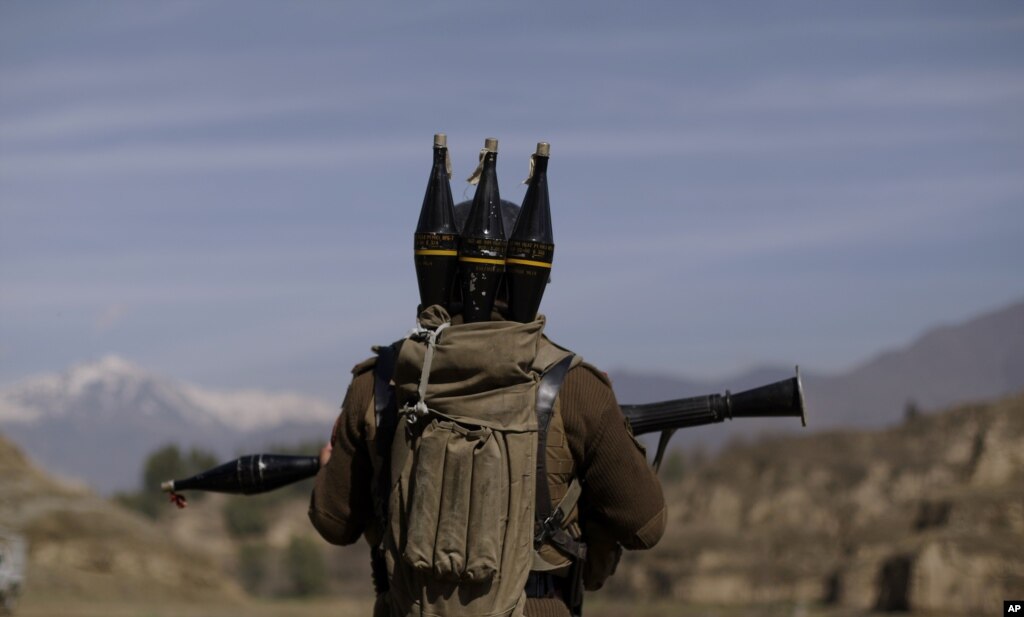
It’s become a small industry. In foreign policy research institutes around Europe and the US the last six months have been spent producing papers, attending seminars, giving lectures and contributing to workshops all focused on answering the question: ‘what will happen in Afghanistan after 2014?’ I have been to a fair few myself.
It’s a question that has everything a think tank needs. It’s complicated, forward looking and has implications for policy. Influencing policymakers, after all, is a think tank’s holy grail.
And the reason everyone is asking the question is clear enough. The next 12 months will see two major developments in Afghanistan: the end of Hamid Karzai’s presidency and the withdrawal or reduction of US forces.
And one thing is clear. If Karzai’s now somewhat desperate attempts to establish himself as something other than a US puppet go on long enough, and he manages to scupper the Bilateral Security Agreement, then Congress in Washington will be only too happy to save some cash and leave Afghanistan to its own devices.
The general consensus in the research institutes is that, one way or another, Afghanistan is going to suffer from a long running civil conflict in which no one group will be able to secure a clear victory.
Pakistan, meanwhile, will need to spend 2014 developing a new Afghan strategy. The previous one, after all, has sunk without trace. The idea was that as the world tried to put together a post-2014 political settlement in Afghanistan, various big powers would come knocking on Pakistan’s door seeing it as the only country capable of delivering the Afghan Taliban.
It sounded like a good plan but was based on a flawed premise. The Afghan Taliban, it turns out, have ideas of their own and Pakistan could not deliver them. The consequence has been the increasing irrelevance of Pakistan on the international arena. Closer to home, meanwhile, Pakistan faces an unstable Afghanistan which no doubt will serve as a sanctuary to the TTP.
But not all of Pakistan’s 2014 developments will be made in Afghanistan. Domestic trends will also be at work.
As Nawaz Sharif looks ahead to the new year he should have some confidence that he will complete his third term as prime minister. The PPP is still reeling from its disastrous election and the PTI’s electoral challenge may well be past its peak. As for the army, it would have little popular backing for a coup.
Of course Pakistan’s habitually crisis-ridden political system can take unexpected, rapid turns but, by historical standards, Nawaz Sharif is in a remarkably secure position.
At the same time, there is plenty for him to worry about over the next 12 months. Two issues above all the others will be urgent: the militancy and the dire economic situation. Going by past precedent he is unlikely to do much about either. And, to be fair, in both cases he may have good reason for that.
Shortly after the election Sharif secured an IMF extended facility worth $6.6bn – only slightly below the $7.2bn he asked for. The IMF attached various conditions to be implemented over a 10-year period but, given past history, it presumably has little expectation of them being respected.
Sharif is well aware that international concern about Pakistan’s nuclear assets means the IMF is likely to give the country support even when its conditions are ignored. And since Sharif knows the money will keep flowing, he has little reason to court unpopularity by taking tough economic decisions.
Policy towards the militants, meanwhile, will remain in the hands of the military. Nawaz Sharif could do more to lead the campaign against the militants but he will be unwilling to stick his neck out when he does not control the levers of power.
In 2009 the TTP had a high degree of control of 18 administrative units such as tribal areas within Fata, districts including Upper Dir and Swat and frontier regions such as Bannu. They now have one genuine stronghold: North Waziristan.
Although the number of militant attacks in Pakistan remains very high, it is worth remembering that the situation has improved since 2009. According to the Pakistan Institute for Peace Studies 5,047 people were killed in 2012 in politically inspired violence compared to 12,632 in 2009.
The question is whether the army will try to push the TTP out of North Waziristan. And for three reasons the army might wait until after 2014 before making up its mind.
First, it will be easier to sell the policy of clearing North Waziristan to the Pakistan electorate as being in Pakistan’s rather than the US’s interest after the US drawdown in Afghanistan is done. Second, even though the army is convinced that talks will fail, it will have to let negotiations between the government and the TTP run their course. Third, it’s always easier to put things off.
For decades now dire prognostications have been made about Pakistan. Many have been proven to be true. The army’s support for Kashmir militant groups did lead to a more general jihadi culture. The failure to give the Baloch people what they needed did lead to a violent insurgency. The politicians’ flagrant corruption did undermine support for the democratic process.
At the same time many pessimistic predictions have turned out to be wrong. The nuclear weapons have not fallen into the hands of jihadis; the economy has not collapsed and the country’s territorial integrity has not been compromised.
With the benefit of hindsight it would seem the best prediction might have been that Pakistan will, somehow, muddle along.
And as we all look ahead to 2014 that’s probably about as good a prediction as you’ll get.
The writer is a freelance British journalist, one of the hosts of BBC’s Newshour and the author of the new political thriller, Target Britain.
By Owen Bennett-Jones
The News International
The News International

Afghanistan faces a critical year ahead as the NATO-led war draws down after twelve years and an impasse in U.S.-Afghan negotiations leaves uncertain the future of Western military support. A drop-off in aid and elections slated for April, which could deliver the country’s first democratic transfer of power, will also test Afghanistan’s stability. Five experts offer their forecasts.
The end of the U.S. war in Afghanistan should not be confused with the end of the Afghan war, writes the International Crisis Group’s Graeme Smith, as Afghan troops cannot yet secure the country on their own. Yet even viable security forces cannot ensure stability if President Hamid Karzai’s successor lacks broad-based support, writes RAND’s Seth Jones, or if state institutions fail to become self-sufficient, says Clare Lockhart of the Institute for State Effectiveness. Nader Nadery, of the Afghanistan Research and Evaluation Unit, warns that an economic downturn threatens to reverse a decade of social progress, while CFR’s Daniel Markey notes that neighboring Pakistan will continue to influence Afghan affairs.
Graeme Smith, Senior Analyst, International Crisis Group, and Author, The Dogs Are Eating Them Now: Our War in Afghanistan
Afghan Forces Cannot Go it Alone
The biggest misconception about the Afghan war is that the conflict is ending. President Barack Obama encouraged this view in his 2013 State of the Union address, declaring: “By the end of next year, our war in Afghanistan will be over.” He repeated a similar claim on Veterans Day. If the president was reading the Pentagon’s reports to Congress, it’s easy to see how he got the wrong idea. The U.S. military’s assessment is that violence has fallen and “Afghan security forces are now successfully providing security for their own people.”
Such rhetoric paves the way for a U.S. exit, but it doesn’t help Afghans. If local forces were successfully securing their people, we would not be seeing more civilian deaths. In fact, the United Nations reports that civilian casualties rose 16 percent in the first eight months of 2013.
Fierce battles this year also saw local security forces endure record casualties. Across the country, the UN found a rise in violence—up 11 percent this summer. Other analyses by Western experts show even greater escalation.
This reality on the ground refutes the Pentagon’s picture of a war that is cooling down. I’ve been studying transitional areas for the International Crisis Group as we prepare a report on the insurgency, and have found that security worsened in many places as foreign troops pulled back. The situation has calmed in some locations, but local elders warn that insurgents still control large parts of the countryside and may be waiting for a better time to attack.
Why does this matter? President Hamid Karzai must sign a bilateral security agreement with the United States. The Afghan government may not have the firepower to stand without a deal in the short term. Also, the United States and other NATO countries need to stay engaged on security issues after 2014. Afghan forces have a fighting chance, but they need significant help—helicopters, logistics, and many other kinds of assistance—to keep the insurgents at bay.
Seth G. Jones, Associate Director, International Security and Defense Policy Center, RAND Corporation
Presidential Candidates Need Multiethnic Consensus
As Washington and Kabul continue to negotiate the terms of a bilateral security agreement, another looming milestone will also have momentous implications for both: the 2014 Afghan presidential election. While many policymakers and analysts focus on who will be the next president, the more important question may be whether Afghanistan’s Pashtun, Uzbek, Tajik, Hazara, and other major constituencies will support the election’s outcome.
The election, tentatively scheduled for April, faces numerous challenges. It will almost certainly be marred by violence and corruption, as was the 2009 presidential election. Perhaps most concerning, the election could further weaken the state if substate actors, especially power brokers from northern and western Afghanistan, lose faith in the central government and accelerate efforts to rearm. These fissures would undermine the cohesiveness of the Afghan National Army and other security agencies, as well as affect the scope and degree of support from neighboring states. India, Russia, and Iran would likely increase lethal and nonlethal support to anti-Taliban forces in the north and west, while Pakistan would support the Taliban and other Pashtun groups in the south and east.
The United States should promote multiethnic coalitions rather than individual presidential candidates and encourage the appointment of cabinet ministers and senior officials who represent each of Afghanistan’s main constituencies.
Several Pashtun presidential candidates have already courted ethnic-minority running mates to demonstrate inclusivity and secure the support of minority constituencies, but candidates can change their running mates at any point up to the election. Prospects for security will improve if the next president and his team receive support, however grudging, from the broad range of political and ethnic groups in Afghanistan.
The United States should also provide financial and other support to ensure poll workers are adequately screened and trained, expand observer missions at voting centers, and move the vote-counting process from voting centers to provincial offices.
An election outcome that is accepted by Afghanistan’s main constituencies is critical for long-term stability in Afghanistan. Without a political consensus, no amount of American manpower after 2014 can stabilize the country.
Nader Nadery, Director, Afghanistan Research and Evaluation Unit
Economic Downturn Threatens Social Gains
Twelve years ago this month, the U.S. war in Afghanistan initiated a transition from Taliban rule, one of the darkest periods in its recent history. The transition Afghanistan faces in the coming year will prove equally decisive.
Afghan security forces will become the nation’s only defense, and the April election, promising the first democratic change of administration, will pose a critical test to Afghanistan’s constitution.
What impact will these security and political transitions have on the social and economic gains made during the past decade? The withdrawal of Western forces will be accompanied by the drawdown of international development agencies, the reduction of aid, and an uncertain investment climate. The immediate effects will be capital flight, heightened risks for investments, and the collapse of drivers of economic growth such us reconstruction, logistics, and transportation. Progress on women’s rights and economic participation, which has been a focus of the post-Taliban government, may fall victim to conservative backlash and diminished political will, further stunting development.
The dangers will become greater if political elites fail to provide certainty regarding Afghanistan’s long-term partnerships—especially in security sector—with the United States and other countries. A recent study by my Kabul-based think tank, the Afghanistan Research and Evaluation Unit, found that widespread lack of confidence in the future has already contributed to a crash in property values in Balkh province, one of Afghanistan’s strongest economies. Conflict-affected provinces in the south and east, which receive the most international military spending, will be hit even harder.
Economic downturn can shock even the most developed nations; the destabilizing effect a recession would have on a fragile state like Afghanistan would be more devastating. Development initiatives such as the rural-based National Solidarity Program promote self-government, small enterprises, and job creation. Such programs would be thwarted by an economic downturn in Afghanistan, which already has one of the world’s highest unemployment rates. Some young, frustrated Afghans with means would seek refuge in the West, contributing to brain drain, while those without means may join the Taliban or other terrorist groups.
Afghanistan’s well-being requires Western donor states to shift their focus from short-term, visibility-driven development projects to sustainable, long-term programs. Failing to do so will undermine our shared sacrifices to deny terrorists a space in Afghanistan.
Clare Lockhart, Director, Institute for State Effectiveness
Stability Requires More Than Security Commitments
There is every chance that Afghanistan can weather the three transitions—in security, politics, and economics—in 2014 and sustain the gains that have been made over the last decade. Security commitments are a necessary condition for post-2014 stability, but the other critical pillar is an election that delivers a new government that can build consensus and deliver on expectations. Assuming that such a government is elected, stability beyond 2014 will rest on its ability to tackle the following five challenges:
First, state institutions beyond the security sector must be viable; a well-functioning army is insufficient to govern a country. Vital state functions include maintaining a public-finance system; providing health services and education; planning infrastructure for transportation, communications, irrigation, and energy; and managing sources of revenue, including municipalities, tenders, and licenses. A reform agenda needs to address corruption and ensure services work not only in the major cities but also in the towns and villages.
Second, Afghanistan can no longer rely on open checkbooks from the rest of the world. The sooner it moves toward revenue self-sufficiency, the sooner it can wean itself off international aid. This will require a clear-eyed look at what’s needed to grow important sectors—including agriculture, extractives, and light industry—and link them to markets inside and outside the country. It will also entail a focus on corruption and reducing revenue losses to middlemen.
Third, Afghanistan needs a politics of inclusion, in which individuals and groups agree on a national agenda and work across historical boundaries to govern together. Though a majority of the country wants to live in peace and stability, the perception and reality of disenfranchisement has been a significant driver of violence. The spring 2014 election is an opportunity both to address grievances and to rally the country’s citizens through national debate and interethnic coalitions. Mechanisms must be established for citizens to come to terms with the grave injuries of the past.
Fourth, Afghanistan and its neighbors have a historic opportunity to move beyond zero-sum politics to find a regional framework for cooperation on political, security, and economic tracks, and cease to use one territory to destabilize another. Such an agreement was possible in Bonn in 2001, and diplomats from each regional country have expressed a desire to revive such a framework.
Fifth, Afghanistan’s new generation—tolerant and talented—is the future of the country. This new generation is full of energy and resources to tackle its country’s challenges. As Afghanistan navigates the complex road ahead, these aspirations and voices must not be sidelined.
Daniel Markey, Senior Fellow for India, Pakistan, and South Asia, Council on Foreign Relations, and Author, No Exit from Pakistan
Pakistan Will Continue to Meddle
Pakistan’s role in Afghanistan in 2014 is likely to be defined by strategic continuity, as Islamabad’s goals have changed little over the years. Yet because Islamabad will feel that it must respond to decisions made in Washington and Kabul, as well as to conditions as they unfold on the ground, Pakistan’s specific policies will be marked by tactical opportunism.
Since Pakistan’s independence in 1947, its leaders have harbored anxieties about Pashtun irredentism, exacerbated by Kabul’s refusal to accept the Durand line as a legitimate border. With the rise of the Pakistani Taliban in Pakistan’s own tribal areas, Islamabad is worried that this latest incarnation of violent militancy will gain strength from within Afghanistan itself. Its concern is that this will be either fueled by local anti-Pakistani sympathies among Afghan tribes or could be part of a Machiavellian strategy by the Afghan intelligence services to play its own version of Pakistan’s old game of violent proxy war. As long as Islamabad perceives this threat, it will exert diplomatic pressure and undertake overt and covert operations of its own.
Another of Islamabad’s concerns is to keep Afghanistan from becoming a base for Indian influence on Pakistan’s western front. Pakistani fears on this score seem hyperbolic to most American observers, yet there is little doubt that Pakistan will try to diminish India’s presence, even if that makes Afghanistan less secure. Pakistan will retain ties to the Afghan groups with which it enjoys the greatest influence, Mullah Omar’s Taliban and the Haqqani network among them, even though any sweeping victory for these groups inside Afghanistan would harm Pakistan’s own security over the long run.
Islamabad will view Afghanistan’s political processes with these longstanding anxieties in mind. The desire to influence the composition of Afghanistan’s future leadership has already led Pakistan to play a facilitating role in “reconciliation” talks between the Taliban and Kabul and the United States. And as Afghan elections heat up, Islamabad will identify candidates it considers friendly, and may attempt to tip the scales in their favor through assistance, pressure, or covert manipulation of the voting process itself.
By Zachary Laub
DEFENSE ONE
DEFENSE ONE


 Posts
Posts

