Showing posts with label Chuck Hagel. Show all posts
Showing posts with label Chuck Hagel. Show all posts

The American Israel Public Affairs Committee (AIPAC) annual conference begins on March 2 and will conclude with an address by Israeli Prime Minister Benjamin Netanyahu on March 4. The organisers boastthat the meeting of “America’s Pro-Israel Lobby” will attract “more than 14,000 pro-Israel Americans, more than two-thirds of Congress, [and] more than 2,200 students from 491 campuses”.
There will be speeches by Senator John McCain and by Secretary of State John Kerry.
As part of the group’s lobbying effort, the attendees will descend en masse on the Capitol Hill offices of Senators and Congressmen, delivering the message that AIPAC is alive and well in spite of some recent very public setbacks.
They will demand that the United States continue to pressure Iran with new sanctions even as the White House is searching for a way to avoid another potentially catastrophic war in the Middle East.
They will argue that Iran is a danger to the entire world and must be reduced to a level where it cannot even contemplate either offensive or retaliatory defensive action against Israel, to include the dismantling of its nuclear programme and destruction of its ballistic missiles with a range exceeding 500 km.
AIPAC will claim record levels of fundraising and grassroots support. Indeed, its endowment totals $100m, its annual budget is nearly $70m and it has more than 200 employees, making it the most powerful and best funded foreign policy lobby in the US. But largely invisible amid the self-congratulating and lobbying process will be any sense of what the actual US vital interests might be vis-a-vis Israel.
The powerful Israel lobby, of which AIPAC is a part, has long argued that the foreign policy and security interests of Washington and Tel Aviv are identical, or to use the currently fashionable expressions, there is no space between the two and the US will always “have Israel’s back”.
A tiny client state
Washington’s political class has wholeheartedly and uncritically adopted both the Israel-centric jargon and also Tel Aviv’s skewed perceptions of Middle Eastern realities, producing the unique spectacle of a great global power doing everything possible to placate a tiny client state. Pandering to Israel will be on full display at the AIPAC conference.
But amid all the celebration AIPAC’s leadership knows that it can no longer produce a napkin and have thesignatures of 70 senators on it within a day. Nor does its steady flow of “information memos” sent to the legislature and the media command the same respect they once did.
AIPAC can no longer draft legislation favourable to Israel, send it over to Congress and expect a finished bill to emerge, passed with a unanimous vote. It has suffered major defeats through its open support for bombing Syria and for legislation increasing sanctions on Iran, the former opposed overwhelmingly by an aroused war-weary public and the latter stalled in a suddenly nervous Congress.
AIPAC also opposed the appointment of Chuck Hagel as Defence Secretary due to his alleged “anti-Israel record”, though it did not do so openly and only lobbied the issue quietly on Capitol Hill. It was, nevertheless, a defeat.
Even The New York Times is taking note that AIPAC is now very much on the defensive, forcing it to respond to the Times commentary with an op-edof its own defending its position on Iran, an uncharacteristic move for a group that is accustomed to operate in the shadows.
The rift has come about because reality and illusion have parted company. The reality is that the US cannot afford another war in the Middle East, either financially or in terms of the unintended consequences that wrecked the Iraqi and Afghan interventions.
It has only one compelling vital interest in the region and that is to keep energy resources flowing and a war with Iran would instead deliver a shock to a world economy that is still in recovery. Against that is the illusion that Israel is some kind of strategic asset or global partner for the US.
Apart from the pressure being exerted by groups like AIPAC, Americans are becoming increasingly aware that Washington has no compelling reason to sacrifice its own interests to sustain the freedom for Israel to behave as it wishes.
Nor does it have any justification to protect it from its neighbours, any more than it has a responsibility to do so for any other country in the Middle East. And there is a growing understanding that the lopsided relationship, not only hugely expensive in dollar terms, motivates terrorist groups like al-Qaeda to attack Americans.
This is not to say that the US cannot play a positive role and act in support of the best interests of all its friends in the Middle East, which it would accomplish by becoming genuinely an honest broker with a demonstrated interest in regional stability rather than in regime change.
AIPAC’s tunnel vision only permits it to see one “closest ally” and that must be Israel. Every other country is therefore reduced to a second rate player whose interests must coincide with those of Tel Aviv or be disregarded.
Wrong side of history
The persistence of the AIPAC argument, which also idealises Israel’s rather flawed and corrupt democracy to help make its case for a “special relationship”, has done grave damage to US interests throughout the Muslim world. As has sometimes been noted, Washington had no enemies in the post-colonial Middle East before Israel was founded in 1948. Now it has few friends.
Washington’s close embrace with Tel Aviv has been fostered by a mainstream media unwilling to be too critical of Israel’s actions. But this long established unanimity of viewpoint involving both media and its symbiotic punditry is beginning to erode as alternative sources of information continue to proliferate, which is why the leadership of AIPAC must seriously be concerned.
The shift in opinion is both permanent and growing in magnitude, including numerous younger Jews and Jewish liberals who have been speaking out to tell AIPAC that itdoes not speak for them, particularly given its record of uncritical support for increasingly hard line Israeli governments.
A better informed American public increasingly averse to foreign military adventures is becoming aware that issues formerly seen in Manichean terms are actually a good deal more complicated and then there is the experience factor. Recent US engagement in Iraq, Libya, and Egypt, all supported by Israel and its supporters for various reasons, are increasingly being regarded as in no way beneficial to the US, quite the contrary.
This explains the lack of fervour for a repeat performance in Syria or against Iran. It also means that AIPAC has found itself on the wrong side of history in terms of the desires of the American people, surely not a good place to be for a Washington lobby.

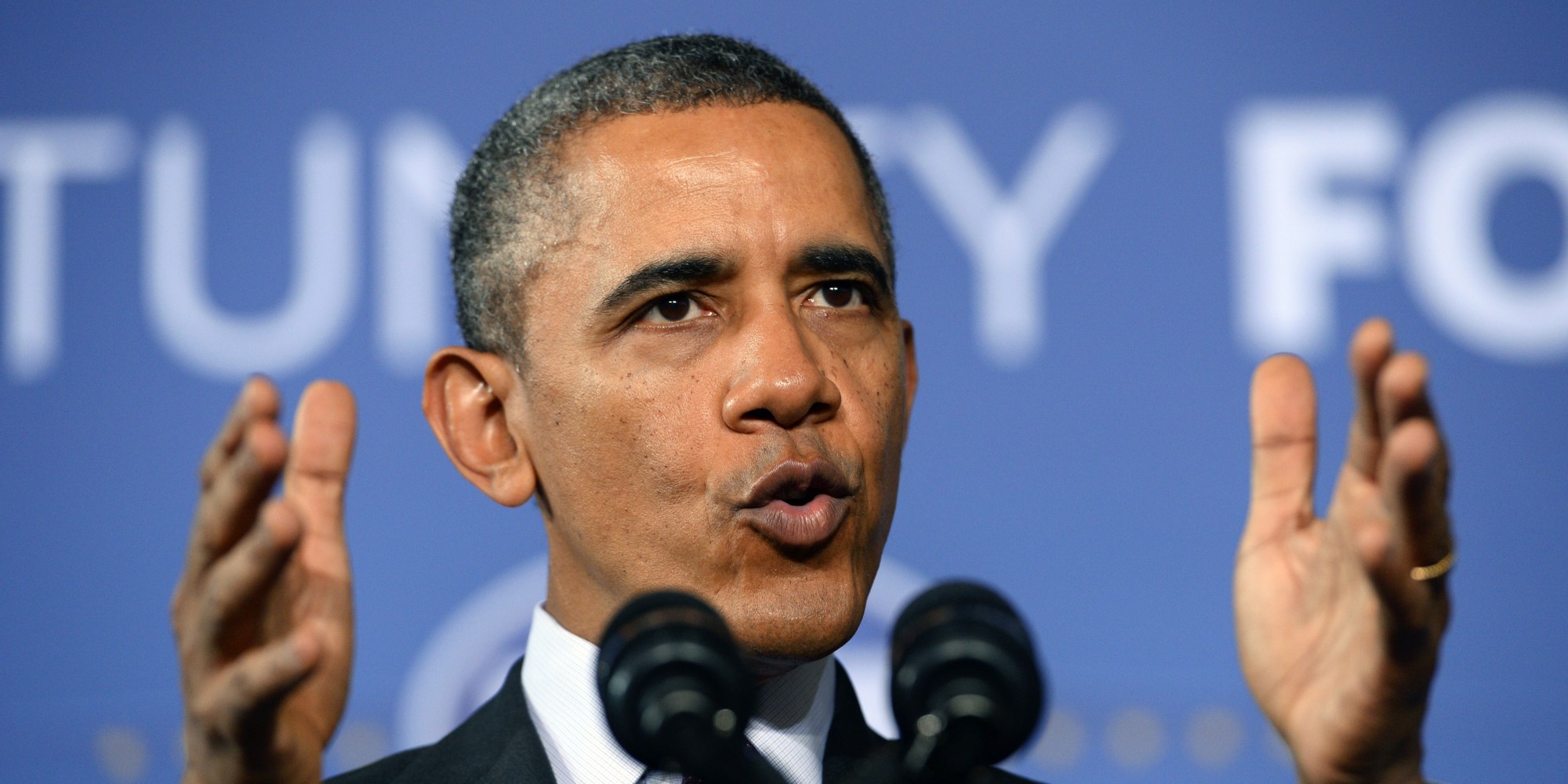
The United States is considering a proposal to withdraw all its troops from Afghanistan by 2017, say two Republicans as official sources confirm that “the zero-option” was also discussed at a White House meeting on Tuesday.
President Barack Obama and Vice President Joe Biden met Defence Secretary Chuck Hagel and senior US generals at the White House to review their options in Afghanistan. Gen Joseph F. Dunford Jr, commander of US and allied forces in Afghanistan, came from Kabul to attend the meeting.
Gen Martin E. Dempsey, the chairman of the Joint Chiefs of Staff, and the vice chairman, Adm James A. Winnefeld Jr; Gen Lloyd J. Austin III, the head of the United States Central Command; and Adm William H. McRaven, head of the United States Special Operations Command, also participated in the discussion.
Separately, the White House reconfirmed its plan to withdraw all but a small residual force from Afghanistan by the end of 2014.
“Together with our allies, we will complete our mission there by the end of this year. And America’s longest war will finally be over,” White House Press Secretary Jay Carney told a briefing.
The United States, however, wants to keep a residual force of about 10,000 after 2014 as well, provided the Afghan government signs a bilateral security agreement.
But on Tuesday evening, two senior Republican Senators, John McCain and Lindsey Graham, told reporters that
And this caused Afghan President Hamid Karzai to move away from the United States and hold secret talks with the Taliban, they argued.
The White House Press Secretary did not directly confirm that the administration was considering such a plan but when asked to comment on the statement by the two senators, he said: “Some senators envision a world in which US troops remain in Afghanistan for decades. Some senators envisioned a world in which US troops remained in Iraq for decades. That’s not the president’s vision.”
Although the US media reported that the Obama administration was upset with Mr Karzai for holding secret talks with the Taliban, the State Department welcomed the talks.
“It’s important to note here that we’ve long strongly supported an Afghan-led reconciliation, which would, of course, be Afghans talking to Afghans,” State Department spokeswoman Jen Psaki said. “So the notion that we wouldn’t support that dialogue is inaccurate.”
The US, however, was not talking to the Taliban, she added.
In a report on President Obama’s meeting with his generals, The New York Times said that the Pentagon too was not against the “zero option”.
“The feeling among the generals is that, ‘Hey, if Karzai doesn’t sign this thing, we are fine with pulling back to zero’,” a senior Pentagon official told NYT.
“Moving to zero troops no longer seems unthinkable, especially with alternatives like drones available,” the official added.
The report said that Vice President Biden had been pressing officials with sceptical questions of what a residual force would accomplish, and aides to Mr Obama have suggested alternatives that would result in a lower troop presence than the military would prefer.
US generals want at least 10,000 American and 5,000 Nato troops in Afghanistan after 2014, saying that if the Afghan government does not accept this deployment, the United States should withdraw all its forces.


 Posts
Posts

