Showing posts with label Bilateral Security Agreement. Show all posts
Showing posts with label Bilateral Security Agreement. Show all posts
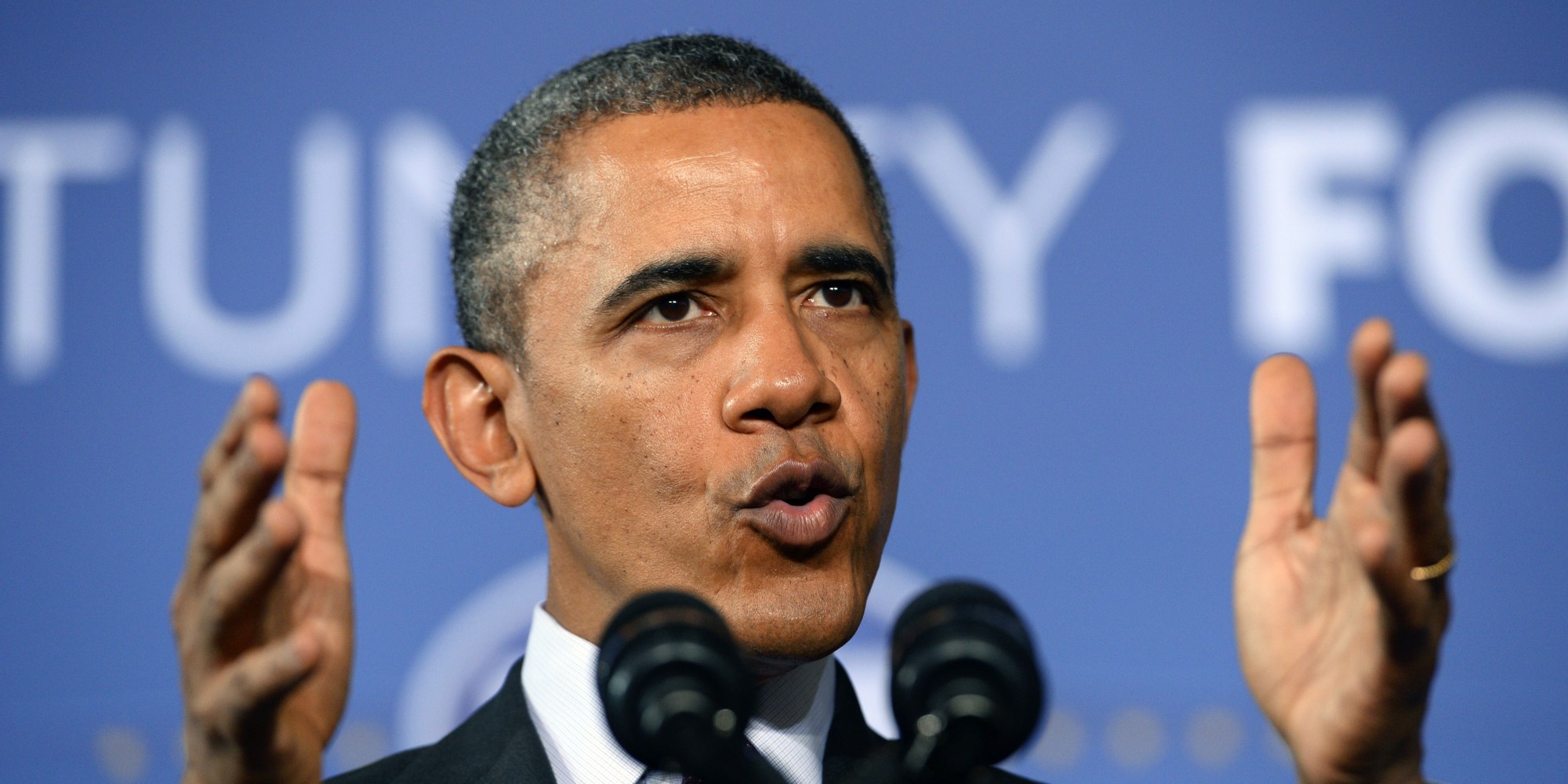
The United States is considering a proposal to withdraw all its troops from Afghanistan by 2017, say two Republicans as official sources confirm that “the zero-option” was also discussed at a White House meeting on Tuesday.
President Barack Obama and Vice President Joe Biden met Defence Secretary Chuck Hagel and senior US generals at the White House to review their options in Afghanistan. Gen Joseph F. Dunford Jr, commander of US and allied forces in Afghanistan, came from Kabul to attend the meeting.
Gen Martin E. Dempsey, the chairman of the Joint Chiefs of Staff, and the vice chairman, Adm James A. Winnefeld Jr; Gen Lloyd J. Austin III, the head of the United States Central Command; and Adm William H. McRaven, head of the United States Special Operations Command, also participated in the discussion.
Separately, the White House reconfirmed its plan to withdraw all but a small residual force from Afghanistan by the end of 2014.
“Together with our allies, we will complete our mission there by the end of this year. And America’s longest war will finally be over,” White House Press Secretary Jay Carney told a briefing.
The United States, however, wants to keep a residual force of about 10,000 after 2014 as well, provided the Afghan government signs a bilateral security agreement.
But on Tuesday evening, two senior Republican Senators, John McCain and Lindsey Graham, told reporters that
And this caused Afghan President Hamid Karzai to move away from the United States and hold secret talks with the Taliban, they argued.
The White House Press Secretary did not directly confirm that the administration was considering such a plan but when asked to comment on the statement by the two senators, he said: “Some senators envision a world in which US troops remain in Afghanistan for decades. Some senators envisioned a world in which US troops remained in Iraq for decades. That’s not the president’s vision.”
Although the US media reported that the Obama administration was upset with Mr Karzai for holding secret talks with the Taliban, the State Department welcomed the talks.
“It’s important to note here that we’ve long strongly supported an Afghan-led reconciliation, which would, of course, be Afghans talking to Afghans,” State Department spokeswoman Jen Psaki said. “So the notion that we wouldn’t support that dialogue is inaccurate.”
The US, however, was not talking to the Taliban, she added.
In a report on President Obama’s meeting with his generals, The New York Times said that the Pentagon too was not against the “zero option”.
“The feeling among the generals is that, ‘Hey, if Karzai doesn’t sign this thing, we are fine with pulling back to zero’,” a senior Pentagon official told NYT.
“Moving to zero troops no longer seems unthinkable, especially with alternatives like drones available,” the official added.
The report said that Vice President Biden had been pressing officials with sceptical questions of what a residual force would accomplish, and aides to Mr Obama have suggested alternatives that would result in a lower troop presence than the military would prefer.
US generals want at least 10,000 American and 5,000 Nato troops in Afghanistan after 2014, saying that if the Afghan government does not accept this deployment, the United States should withdraw all its forces.


The Afghan government has only “weeks and not months” to sign the security agreement with the United States, White House press secretary Jay Carney said.
The United States has been pressing the Afghan government of Hamid Karzai to sign the Bilateral Security Agreement, saying a signed document is needed to plan how many U.S. troops would remain in Afghanistan to train Afghan security forces and conduct counterterrorism operations after the U.S.-led NATO coalition forces complete their withdrawal by the end of this year.
Carney, in his media briefing Monday, said as each day passes in the new year, “it becomes harder to plan with our NATO allies for a post-2014 mission because we can’t do that without a BSA that’s signed after it’s been negotiated.” The agreement has already been overwhelmingly approved by Afghanistan’s Loya Jirga council of elders last November.
“And as you know, there were commitments by the Afghan government to complete that by the end of the year,” Carney said.
If the BSA is not signed, there may not be any U.S. or NATO troop presence after this year. Karzai, however, has so far refused to sign it unless there are more guarantees, including additional assurances that civilians will be protected. He has also said it should be signed only by Afghanistan’s new president after the April elections.
Earlier, the United States had wanted the agreement by end of last December.
Carney said while U.S. President Barack Obama believes that the “best policy” is to maintain a presence in Afghanistan, “he cannot and will not do that absent a BSA.”
While Carney would not comment on any new timeframe to sign the agreement, he said if the BSA is not concluded promptly, “then we will be forced to initiate planning for a post-2014 future in which there would be no U.S., nor NATO troop presence in Afghanistan. That’s not the future we’re seeking.”
“Look, I don’t have a specific deadline or other policy decisions to announce today, but I can tell you that we’re talking about weeks and not months,” Carney added. “And the clock is ticking for the reasons I laid out. We can’t contemplate a continued presence there absent a signed bilateral security agreement.”
The United States has refused to make any changes in the agreement as it took more than a year of intense negotiations just to arrive at the final draft presented to the Loya Jirga. With an agreement in place, up to 15,000 foreign soldiers would remain in Afghanistan to train the Afghan forces and conduct counter-terrorism operations.
Without a signed agreement, Afghanistan may also lose billions of dollars of international aid it badly needs to bolster its security forces.
NATO Secretary-General Andres Fogh Rasmussen has said a NATO Status of Forces Agreement cannot be signed until the agreement with the United States is concluded.
![He has to give up playing petulant games and prepare Afghanistan for its transition The fierce Kabul winter is still mild but the mood of the political elite, as I […]](http://tacstrat.com/content/wp-content/uploads/2013/12/PROTESTS1_1686209d-115x115.jpg) He has to give up playing petulant games and prepare Afghanistan for its transition
He has to give up playing petulant games and prepare Afghanistan for its transition
The fierce Kabul winter is still mild but the mood of the political elite, as I discerned during a recent visit to the Afghan capital, is cold, dark and grim, looking at 2014, the year of transitions with anxious apprehension. The sentiment in Kabul’s bazaars, with the economy in a depressed state, is no different.
The urban youth, more exposed to the world and taking increasingly to social media, are more hopeful and determined to avoid a return to the days of anarchy and civil strife. The Taliban insurgency and violence as well as its influence in the Pashtun areas is a threat but there is quiet conviction that the Afghan Security Forces will be able to meet their challenge if Western support continues and the Presidential election scheduled for April 5 next year is credible and leads to the formation of a coherent government.
Afghanistan’s attention is currently focussed on the controversy relating to the Bilateral Security Agreement (BSA) with the United States, the internal peace process with the Taliban and the Presidential elections. In this discourse, there is also the thought — unlikely as it may seem — will President Hamid Karzai play one last card to continue beyond his constitutionally mandated term which ends in September 2014.
To be fair, President Karzai has, on his part, said all the right things about his “retirement”. More significantly, the Presidential election process has moved ahead. The Election Commission has cleared a final list of 11 Presidential candidatures and running mates for the election. If any doubts remain, it is because of the absence of a tradition of peaceful transfer of power and of constitutional practice. It is also because of Mr. Karzai’s record of brilliant political manoeuvre; hence the view that he wishes to continue but is not to be blamed for wanting to do so. Mr. Karzai’s position on the BSA has disappointed a majority of Afghans. The text was closed in mid-November after long and difficult negotiations. Mr. Karzai was required under the constitution to sign it and send it to Parliament for approval. He decided to summon a traditional Loya Jirgah (grand assembly) to endorse it before sending it to Parliament. The over 2,000 members of the Jirgah from all over Afghanistan were cleared by Mr. Karzai.
It seems certain now that Mr. Karzai misread the mood of the country, reflected in the stand of the Loya Jirgah, on the BSA. There is no doubt that there is deep resentment, especially in the Pashtun areas of southern and eastern Afghanistan, against the Coalition forces for having entered Afghan homes during operations against the Taliban. There is also anger over the death of civilians resulting from the U.S. bombing.
Above all, the Afghans are afraid of the country reverting to anarchy; an overwhelming majority of the people, including Pashtuns, feel that the residual presence of U.S. and NATO forces after 2014 is essential for the stability of the country. Mr. Karzai basically wanted the Loya Jirgah to give an equivocal endorsement to the BSA so that he would have space for further negotiation with the U.S.
However, the Jirgah not only approved it but also demanded that he should sign it by the end of December. The chairman of the Jirgah, a veteran Jihadi leader and Islamic scholar, Hazrat Sibghattullah Mojededi was angered when Mr. Karzai imposed new conditions on the U.S. and said that he would sign the BSA only in April 2014. All this has never happened in a Loya Jirgah and has diminished Mr. Karzai’s image.
Mr. Karzai is now hostile to the U.S. and openly says that there is lack of trust between them. It was not so to begin with. In this writer’s first meeting with Mr. Karzai, in 2002, he was deeply appreciative of the U.S. role in liberating Afghanistan from Taliban tyranny. Mr. Karzai’s relations with President Bush were close and warm but have been distant and frosty with President Obama. He is also not reconciled that Afghanistan is no longer a foreign policy priority for the U.S and that it merely wants an orderly exit from the country.
Mr. Karzai will eventually sign the BSA, probably before the Presidential campaign begins in early February. He knows that the full Western support — military and civilian — which is vital for Afghanistan’s future, is linked to it. But the delay has added to uncertainties reflected in the fall of the Afghan currency and the postponement of important investment decisions by overseas Afghans.
Mr. Karzai has relentlessly pursued a quest for a rapprochement with the Taliban. The Doha initiative failed because of Taliban overreach, but at a more fundamental level the Taliban is simply not interested in negotiating with Mr. Karzai. The BSA will also be a major stumbling block for the Taliban is against the continuing presence of U.S. and NATO forces in Afghanistan. Mr. Karzai has pinned his hopes on Mullah Baradar, who has been “released” by Pakistan to kick-start the process. His preferred venue for the talks is Afghanistan but he is willing to have them in Saudi Arabia or Turkey.
Mullah Baradar’s standing among the Taliban is unclear. In any event, the Taliban core leadership is unwilling to give up its basic Islamist principles which are contrary in many respects to the old Afghan traditions and the constitution.
Some senior Afghan political personalities suspect that one purpose of the reconciliation process for Mr. Karzai is to prolong his stay in office. If the process gathers traction, he may tell the country that his continuance is essential for its success and some Afghans may support this position though it will be opposed by those who want to see him go and will lead to turbulence.
Fluid political scene
The Presidential election’s success is necessary to combat the insurgency. Fraud had vitiated the 2009 election and it may become an issue in the forthcoming election too. The principal candidates are former Foreign Ministers Dr. Abdullah and Zalmai Rasool, and former Finance Minister Ashraf Ghani. They are all Pashtuns (as are the rest) but Dr. Abdullah, whose mother was a Tajik and who was a close aide of Ahmed Shah Masood, is perceived to be a Panjsheri.
The tickets — the constitution provides for two Vice-Presidents — indicate the fluidity of the Afghan political scene and the continuing importance of ethnic considerations and ethnic leaders. Mr. Karzai has said that he will not support any candidate, including his brother Qayyum Karzai, but many suspect he may quietly give his administration’s support behind the scenes to a favourite (Zalmai Rasool perhaps) especially in the second round as the election is expected to go to. Currently, Dr. Abdullah is the frontrunner.
President Karzai has a central role and responsibility to steer Afghanistan while adhering to the constitution to safety. He has to give up the propensity to play petulant games and, instead, prepare the country for the transition. The question is, does he have the vision to do so?


 Posts
Posts

